

As PLN (the state electricity company) continues to adjust its electricity tariffs and the cost of living keeps rising, more and more households and businesses in Indonesia are turning their attention to the “gold” on their rooftops – solar energy. However, installing solar panels alone does not guarantee savings. To truly achieve “zero electricity bills,” you must understand one critical concept: Self-Consumption. This article reveals how you can combine solar PV with energy storage to build a closed-loop energy system – and make sunlight work for you.
What Is “Self-Consumption”?
Simply put, self-consumption means that the electricity generated by your solar PV system supplies your local loads first – powering your air conditioners, refrigerators, lighting, and other appliances. Unlike the traditional model that exports all generated power to the grid, self-consumption emphasizes internal use.
Why does this matter in Indonesia? Under the current tariff structure, the price at which the grid buys back your surplus electricity is often lower than the price at which it sells electricity to you. Therefore, every kilowatt-hour you produce and consume yourself holds the same value as the highest-tier electricity you do not have to buy from PLN. In other words, self-consumption represents the most efficient way to use energy – and serves as your best defense against future tariff hikes.
The Closed-Loop Logic Behind Zero Bills
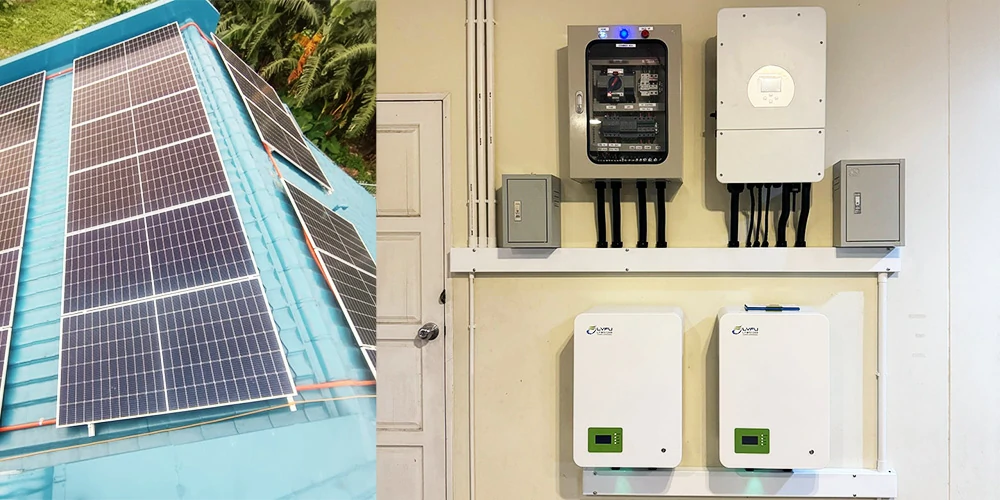
To achieve genuine zero bills, solar panels alone are not sufficient – because your energy needs do not disappear when the sun goes down. This is where battery storage comes into play. By adding a storage system, you create a complete closed-loop logic:
Step 1: Daytime – Generate and Consume in Real Time
When sunlight hits your panels, they convert solar energy into DC power. The inverter then transforms this DC power into AC power for your household appliances. In short, you use solar energy directly during the day.
Step 2: Midday – Store Excess Energy
Noon typically brings peak generation – but often not peak consumption. Instead of wasting this surplus, your system automatically channels it into the battery for later use.
Step 3: Evening – Release Stored Energy
As the sun sets and your PV system stops generating, your household enters its peak consumption period. At this point, the storage system automatically switches to discharge mode, releasing the energy it stored during the day. As a result, you continue to enjoy free, clean electricity throughout the night.
How to Start Your Zero-Bill Journey
Ready to make the switch? Follow these four practical steps:
- Assess your energy needs – Review your monthly PLN bill to identify your base load and peak demand patterns.
- Design your system – Based on your available roof area and consumption data, select appropriately sized PV panels and battery storage capacity.
- Work with certified professionals – Choose qualified suppliers and installers who understand and comply with Indonesian standards.
- Monitor and optimize – Use a mobile app to track your generation and consumption in real time, and refine your usage habits accordingly.
“Self-consumption” is more than just a technical term – it represents a new way of living. Against the backdrop of rising PLN tariffs, achieving zero electricity bills is no longer a distant dream. By following the simple closed-loop logic – generate during the day, store the surplus, and use it at night – you not only take control of your energy future but also save significantly on household expenses. At the same time, you contribute to Indonesia’s green energy transition.
