

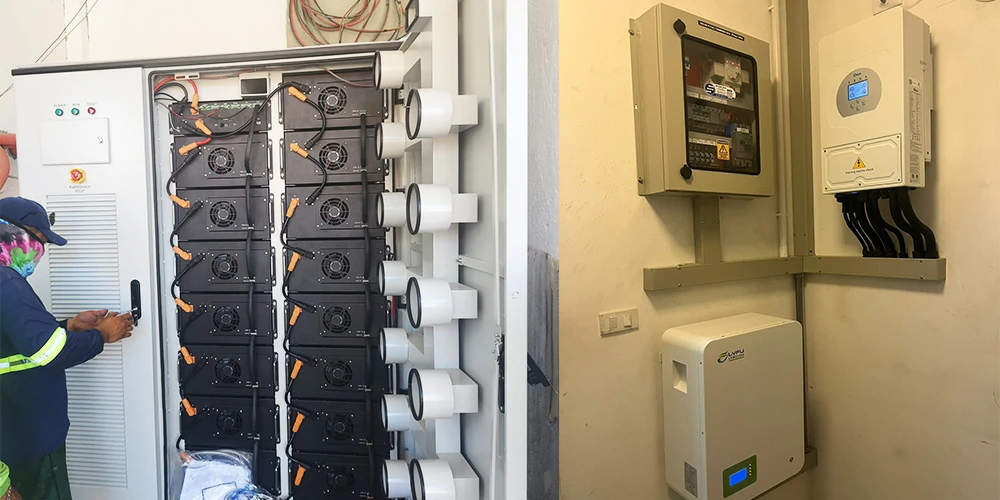
Part 1: Core Certifications for All Energy Storage Systems
Whether you offer residential or C&I energy storage, you must meet these foundational requirements.
1. CE Declaration of Conformity
Every product must carry a CE mark. To obtain this, you need to issue a Declaration of Conformity stating that your product complies with all relevant EU directives and harmonized standards. This is not optional – it is a legal requirement.
2. Technical File
You must compile a Technical File that documents all design, manufacturing, and testing information. This file demonstrates due diligence and must remain available for inspection by market surveillance authorities. Keep it complete and up to date.
3. Test Reports
Back up your claims with valid test reports from accredited laboratories. These reports provide third-party evidence that your product meets the required standards.
4. IEC 62619 – Safety for Secondary Lithium Batteries
This standard specifically addresses the safety of secondary lithium cells and batteries used in industrial and energy storage applications. It covers both cell and battery-level tests, including thermal, mechanical, and electrical safety. Many European home storage brands already provide this certification, and we strongly recommend you do the same.
5. UN 38.3 – Transport Safety
UN 38.3 certifies that your lithium batteries can be transported safely. This standard is non-negotiable for shipping by air, sea, or land. Ensure you complete this certification before any logistics arrangements.
Part 2: Additional Requirements for Residential Energy Storage
For home energy storage systems, the above five certifications usually suffice. However, you should also pay attention to the following.
6. PCS – EN 50549 for Grid Connection
While the battery itself does not require grid connection certification, the inverter or Hybrid Inverter does. In Portugal, the PCS (Power Conversion System) must comply with EN 50549. This standard governs grid connection for distributed generators. In short, the battery supplier can focus on battery safety, but the inverter provider must handle this certification.
Part 3: Additional Requirements for Commercial & Industrial Energy Storage System
C&I Energy Storage Systems face more stringent scrutiny. Beyond the mandatory items, we recommend the following.
| Certification | Requirement Level | Explanation |
| CE | Mandatory | Legal requirement for all products sold in the EU. |
| IEC 62619 | Mandatory | Essential for safety of secondary lithium batteries. |
| UN 38.3 | Mandatory | Required for safe transport of lithium batteries. |
| IEC 61000 | Mandatory | Ensures electromagnetic compatibility for the battery + BMS system. |
| EN 62477-1 (PCS) | Recommended | Covers safety requirements for power electronic converter systems. |
| EN 50549 (PCS) | Mandatory for grid connection | This is essential if your C&I system will operate in parallel with the Portuguese grid. |
| Fire Test Report | Required for large projects | Large-scale installations increasingly require fire test reports to demonstrate system safety. |
Part 4: System-Level Certifications
1. EN IEC 61000 – EMC for Battery + BMS
This standard addresses electromagnetic compatibility. It is especially important if your system includes communication modules, WiFi, CAN/RS485, or intelligent EMS. In short, ensure your battery and BMS do not emit excessive electromagnetic interference and can withstand external disturbances.
2. Grid Connection – Inverter and PCS Responsibilities
Let us clarify a key point: the battery itself does not handle grid connection certification. Instead, the inverter or Hybrid Inverter must meet the Portuguese grid requirements. Specifically, the PCS must comply with EN 50549. Therefore, when selecting components, coordinate closely with your inverter partner to ensure compliance.
Part 5: Fire Testing for Large C&I energy storage Projects
For larger C&I energy storage projects, fire safety has become a key concern. Increasingly, project developers and insurers require fire test reports. These reports demonstrate thermal runaway propagation limits and overall system fire safety. We recommend conducting these tests early, as they can significantly impact project timelines and approvals.
To summarize, Portugal follows a structured certification path for lithium battery storage systems:
- For residential energy storage: CE, Technical File, Test Reports, IEC 62619, UN 38.3, and ensure your inverter meets EN 50549.
- For C&I ennergy storage: All residential requirements, plus IEC 61000 for EMC, EN 62477-1 (recommended), EN 50549 for PCS (grid mandatory), and fire test reports for large projects.
By preparing these certifications in advance, you can enter the Portuguese market with confidence.
