

2026 Germany C&I Energy Storage Models: A Definitive Business Guide
Within Germany’s “Energy Transition 2.0” wave, the commercial and industrial (C&I) sector confronts a fundamentally new energy landscape. On one hand, the high penetration of renewable energy sources triggers extreme electricity price volatility, with negative prices occurring frequently. On the other hand, the comprehensive rollout of smart meters and dynamic electricity tariffs has become the norm. In this context, energy storage has evolved from a mere “backup power supply” into a “core asset” for enterprises seeking to reduce costs, boost efficiency, and participate in electricity market arbitrage.
To provide clarity, this article synthesizing the guiding frameworks established by the Association of German Chambers of Industry and Commerce (DIHK) and the German Energy Storage Association (BVES), alongside the latest market data from RWTH Aachen University, this article systematically outlines the on-the-ground methodology for German C&I storage in 2026. It provides a clear lens on the latest strategies shaping the sector.
Current Status: Installed Capacity Doubles to 1.48 GWh, Unlocking “Flexibility” Value
Consider these pivotal statistics from May 2026, which underscore the explosive growth in Germany’s C&I storage market:
According to RWTH Aachen University’s Battery Charts, the total installed capacity of C&I energy storage systems (with a capacity of <1000 kWh and power of <1000 kW) in Germany has now reached 1.48 GWh. Notably, this figure represents a doubling of capacity since early 2025.
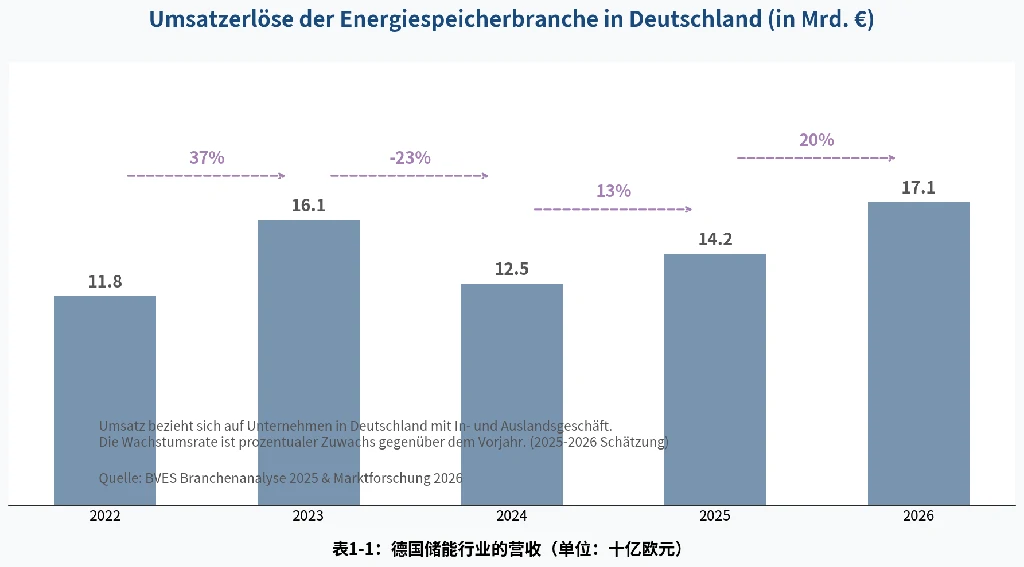
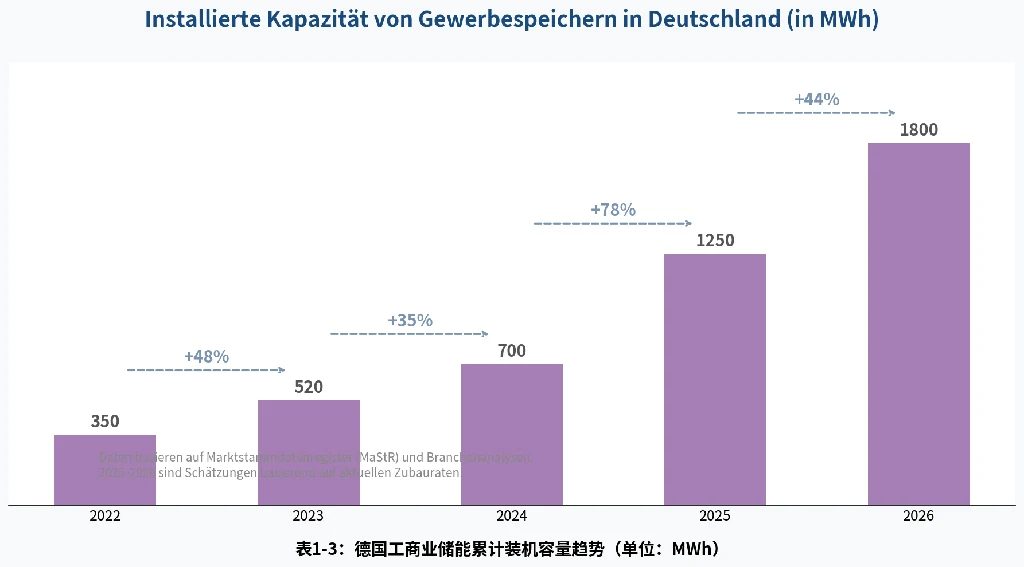
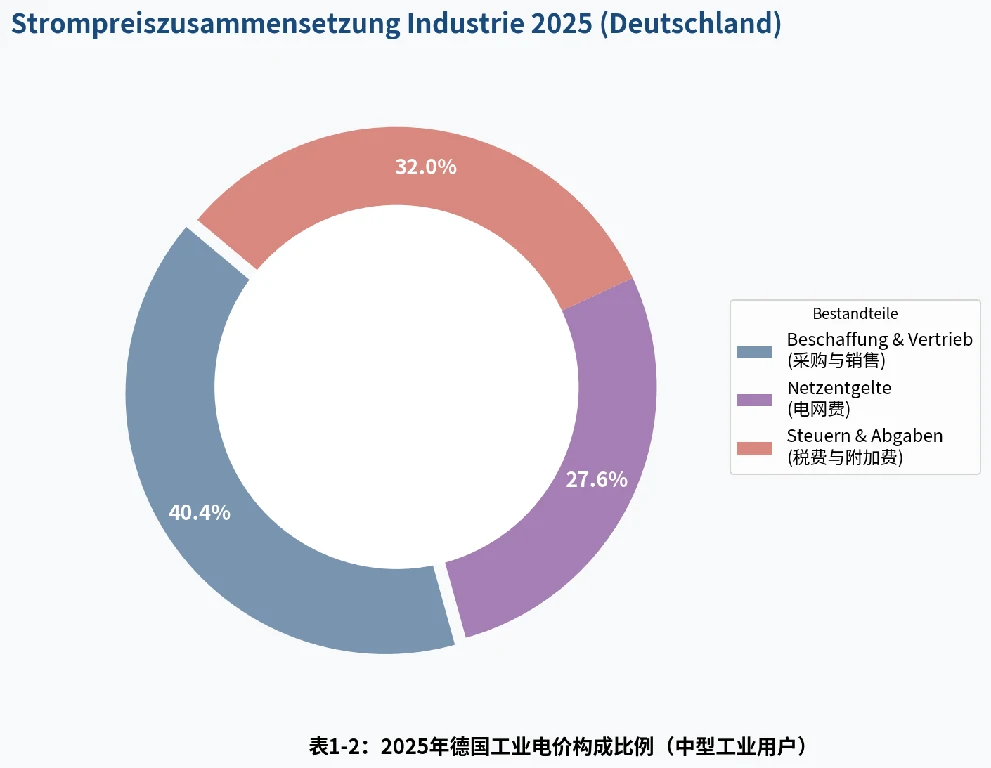
This raises a key question: Why does storage continue to attract such intense interest?
On the policy front, the 2026 implementation of the “Industrial Electricity Price” subsidy (Industriestrompreis) and grid fee subsidies has somewhat alleviated the absolute electricity cost burden for businesses. Nevertheless, a new challenge has emerged: electricity price volatility, evidenced by over 600 hours of negative electricity prices in Germany during 2025. Consequently, the core value of C&I storage lies in its “flexibility.” Specifically, it enables enterprises to “earn money by consuming power” during negative price windows, reduce demand charges through peak shaving, and generate additional revenue by providing grid services via Virtual Power Plants (VPPs).
Core Strategies: 4 Business Models and Multi-Use Stacking to Maximize Returns
1. Energy Procurement Optimization: Shifting from Passive Purchasing to Active Arbitrage
At its core, this model captures value from dynamic tariff fluctuations and increases self-consumption rates.
- Dynamic Tariff Arbitrage: By 2026, German C&I consumers have widely adopted dynamic electricity tariffs. Consequently, companies can now lock in low or even negative prices on the Day-Ahead or Intraday market to charge their batteries and discharge during peak price windows.
- Self-Consumption Optimization: Furthermore, pairing a storage system with rooftop PV allows a business to store its self-generated power. This approach not only boosts the self-consumption rate from 30% to over 70% but also exempts the self-consumed portion from grid fees and taxes.
2. Grid Fee Optimization: Surgically Reducing Maximum Demand
In addition to energy cost savings, grid fee optimization presents a significant opportunity. Although the German government introduced subsidies for transmission grid fees in 2026, the capacity charge, which is based on the “maximum demand,” remains a significant cost driver.
- Peak Shaving: When a business experiences peak loads —for instance, when starting up heavy machinery, the storage system discharges power to shave the peak. Consequently, by reducing the load by 10%, a company can achieve a substantial decrease in its grid fees.
- §19 StromNEV Rule: This regulation offers an 80% to 90% reduction in grid fees for enterprises with an annual consumption exceeding 10 GWh and a utilization time frame over 7,000 hours. Specifically, energy storage systems help companies reach this threshold by charging during low-load periods and discharging during peak-load periods, thereby smoothing the load profile and extending the operational time frame.
3. Energy Trading & System Services: Generating Revenue from Grid Support
Moving beyond cost optimization, this model suits systems of a certain scale, which generate additional revenue by participating in electricity markets through a VPP. By 2026, over 60% of newly installed C&I storage systems come standard with a VPP interface.
Automatic Frequency Restoration Reserve (aFRR): As markets evolve, C&I storage assets are pivoting from the fiercely competitive Frequency Containment Reserve (FCR) market to the aFRR market, which offers more stable yields. In this context, battery storage systems, with their rapid response capability, function ideally for delivering such grid-balancing services.
4. In-House Enterprise Services: Production Assurance and Infrastructure Upgrades
Beyond direct financial returns, storage resolves critical infrastructure bottlenecks:
- E-Truck Fast-Charging Support: Logistics hubs and fleet operators can install a storage system to support multiple 150 kW or higher-power fast-charging stations without requiring prohibitively expensive grid capacity upgrades.
- Power Quality Assurance (UPS): Storage systems shield precision manufacturing equipment in sectors like semiconductors and pharmaceuticals from millisecond-level grid fluctuations caused by high renewable energy penetration. This protection minimizes costly production downtime. It is worth noting that, as Europe largely avoids diesel generators for this application, battery storage represents the optimal solution for guaranteeing power quality.
