

A Compliance Guide for Exporting Lithium Batteries to Southeast Asia’s Largest Economy
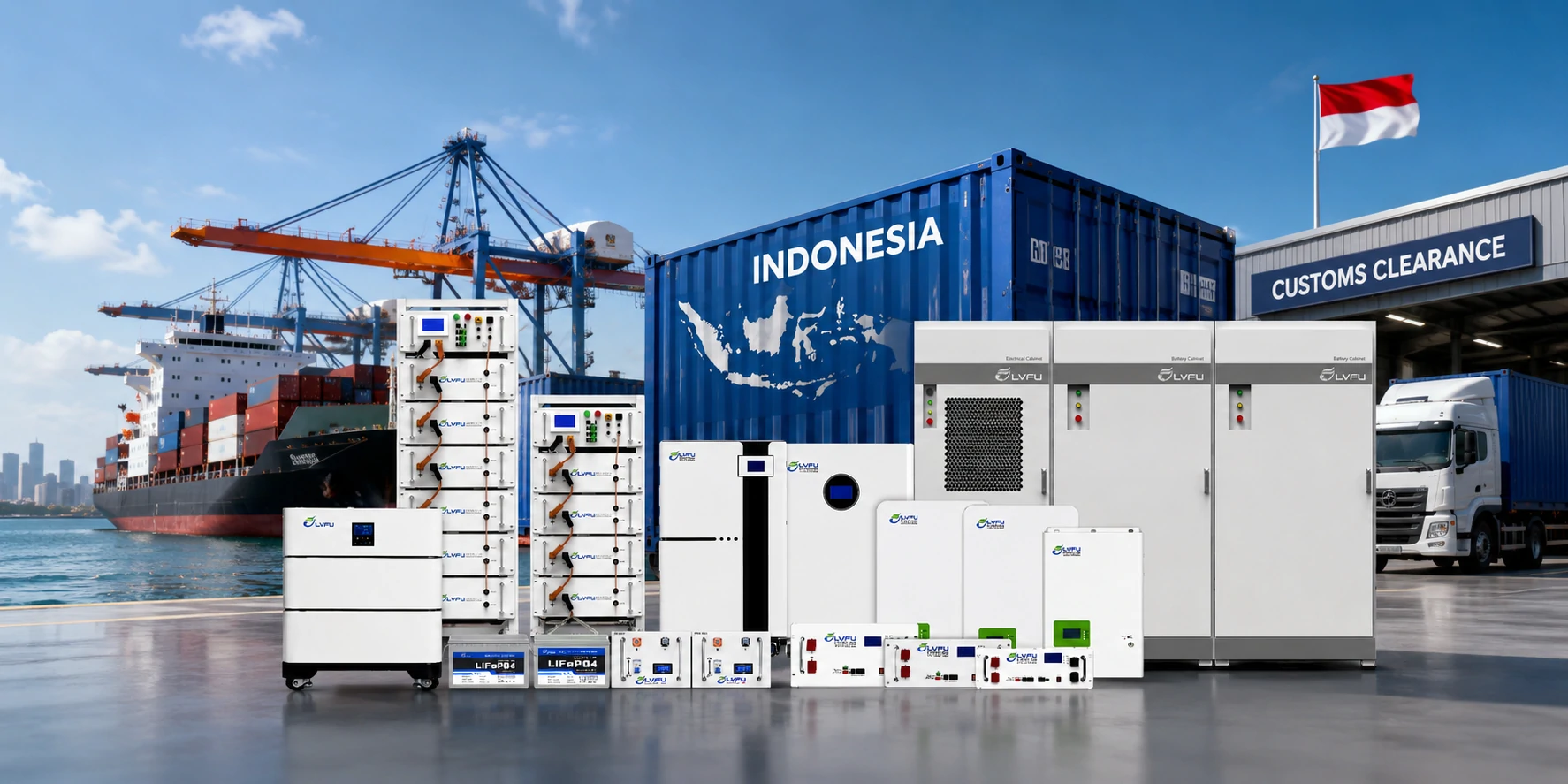
As the global energy transition accelerates, the market for energy storage batteries is expanding rapidly. Indonesia, as the largest economy in Southeast Asia, has shown steadily growing demand for these batteries. However, exporting energy storage batteries—especially lithium batteries—to Indonesia involves complex logistical operations, strict dangerous goods transport regulations, and rigorous customs clearance procedures.
Classification and Labeling of Lithium Batteries as Dangerous Goods
Because of their high energy density, lithium batteries are classified as dangerous goods during transport. Under international regulations, they generally fall into Class 9 (miscellaneous hazardous substances and articles). Specifically:
- UN3480 – Lithium-ion batteries (shipped alone)
- UN3481 – Lithium-ion batteries (packed with or installed in equipment)
- UN3090 – Lithium metal batteries (shipped alone)
- UN3091 – Lithium metal batteries (packed with or installed in equipment)
All battery packaging must clearly display the Class 9 hazard label and the corresponding UN number.
Mandatory Testing: UN38.3 and Drop Test
Every exported lithium battery must pass the UN38.3 test, which verifies that the battery can withstand temperature extremes, vibration, shock, and external short circuits without becoming dangerous during transport. In addition, the packaging must pass a 1.2‑meter drop test to ensure that the battery and any attached equipment remain safe in case of accidental falls.
Packaging Requirements for Safe Transport
To guarantee safety in transit, exporters must follow these packaging rules:
- Use sturdy outer packaging capable of withstanding normal handling pressures and impacts.
- Provide effective short‑circuit protection so that batteries do not contact conductive materials that could trigger a short.
- Secure equipment firmly inside the package if batteries are installed, and take measures to prevent accidental activation during shipment.
- Ensure outer packaging is waterproof—either by using water‑resistant materials or by adding inner liners (e.g., plastic bags), unless the equipment itself is already waterproof.
- Load batteries onto pallets to avoid strong vibrations during handling, and protect the vertical and horizontal edges of pallets with edge guards. After loading into containers, reinforce the cargo properly; the reinforcement method and strength must meet the importing country’s requirements.
Key Customs Clearance Documents for Indonesia
To successfully import energy storage batteries into Indonesia, exporters must prepare and submit the following documents to Indonesian customs:
- Commercial Invoice – detailing product names, quantities, unit prices, and total value.
- Packing List – specifying item names, quantities, gross weight, net weight, and volume per carton.
- Sales Contract – the agreement between buyer and seller.
- Bill of Lading – the ocean transport document.
- Certificate of Origin – proving the product’s origin, which may help secure tariff preferences under FTAs such as RCEP or IJEPA.
- Material Safety Data Sheet (MSDS) – providing chemical composition, hazard characteristics, safe handling instructions, and emergency measures.
- UN38.3 Test Report – certifying compliance with UN transport testing standards.
- SNI Certificate – if the product falls under mandatory SNI certification, a valid certificate is required.
- Import License (API‑U or API‑P) – provided by the local Indonesian importer.
- Customs Clearance Authorization Letter – authorizing a licensed broker to handle clearance.
- Insurance Certificate – proof of transport insurance.
- Other Specific Documents – depending on the product type and end use, additional certifications may be necessary.
Risk Mitigation and Compliance Strategies
To ensure smooth and compliant entry into Indonesia, exporters should adopt the following proactive measures:
- Conduct thorough planning and research before shipment, staying fully updated on the latest Indonesian import regulations, standards, and clearance procedures.
- Partner with experienced international logistics providers and reputable local Indonesian customs brokers who specialize in dangerous goods and understand local customs processes.
- Prepare all documents completely, truthfully, and accurately, because any discrepancies can cause delays or result in penalties.
- Strictly follow all packaging and labeling rules, ensuring full alignment with both international dangerous goods transport requirements and Indonesian local mandates.
- Continuously monitor policy changes, as Indonesia’s trade regulations can shift frequently; always check official sources for the most current information.
Indonesia offers substantial growth opportunities in the energy storage battery sector. However, the associated international logistics and customs clearance hurdles pose real challenges. By thoroughly understanding lithium battery hazard classifications, rigorously adhering to global transport standards, and fully mastering Indonesia’s certification, documentation, and clearance prerequisites, exporters can effectively avoid risks and deliver their goods into the Indonesian market in a compliant and efficient manner.
