

As commercial and industrial (C&I) energy storage systems scale up to megawatt-hour capacities, thermal management has shifted from a secondary feature to a core engineering challenge. For LVFU, a rising innovator in stationary storage, the answer lies not in forced-air convection but in advanced liquid cooling architecture. This article explores how LVFU’s liquid-cooled solutions maintain thermodynamic stability under extreme climatic stress—and why this directly translates to extended battery life and lower total cost of ownership.
The Limits of Air Cooling in Harsh Environments
Traditional air-cooled racks struggle when ambient temperatures drop below -20°C or soar above 40°C. In desert heat, air cooling becomes increasingly inefficient as the temperature gradient between the coolant and the cells collapses. In sub-zero conditions, resistive heaters often overwork, causing localized hot spots during charge acceptance. LVFU’s liquid cooling overcomes both limits by decoupling heat rejection from ambient air through a sealed, dielectric fluid circulation loop.
Extreme Heat Performance (45°C to 55°C Ambient)
In LVFU’s recent desert validation test (simulating midday conditions in the Middle East), the liquid cooling system maintained cell surface temperature within a 2.5°C delta across all 256 cells in a 372 kWh rack. Key data points:
- Inlet coolant temperature: 22°C (chiller-assisted)
- Maximum cell temperature recorded: 28.5°C
- Flow rate: 8 L/min per parallel branch
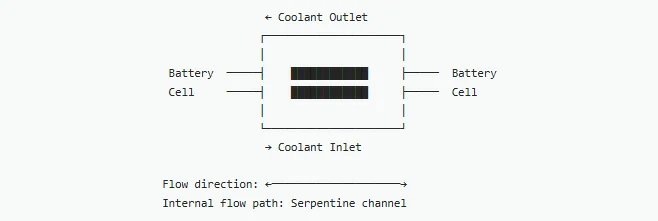
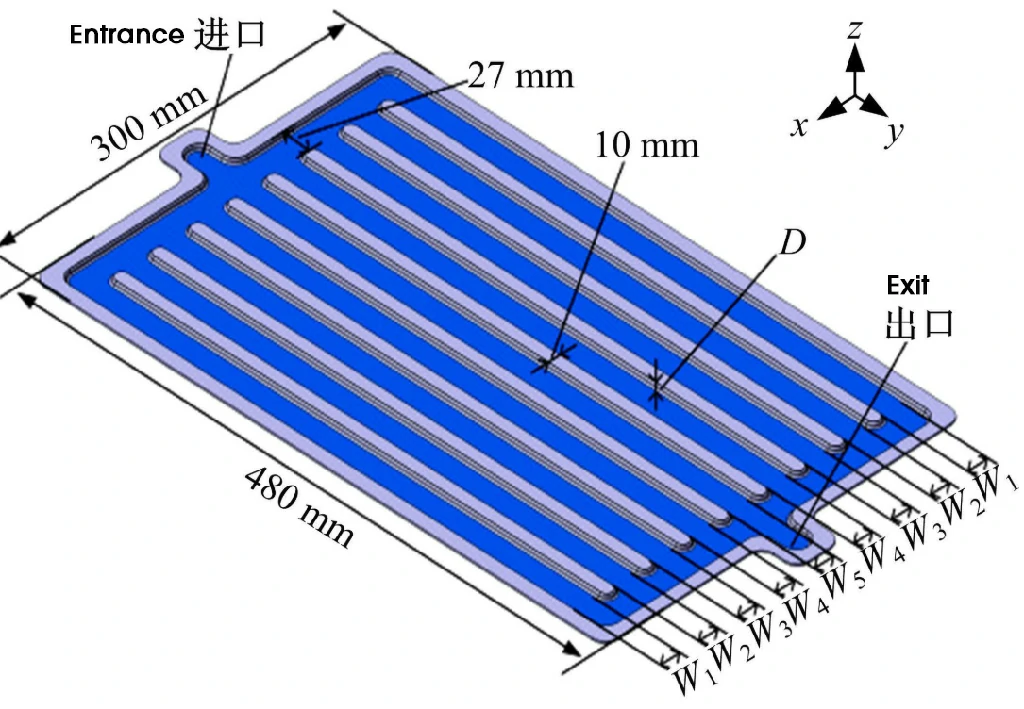
Even during 1C continuous discharge, the system kept cells below 30°C—well inside the lithium-plating-free zone. Unlike air cooling, which exhibits 5–8°C gradients from front to back, LVFU’s serpentine cold plates delivered isothermal surfaces across every cell.
Sub-Zero Operation (-30°C) without Preheating Delay
For C&I customers in high-latitude regions (e.g., Northern China, Scandinavia), winter start-up often requires hours of battery heating before charging is permitted. LVFU solved this via a self-regulating liquid loop that circulates waste heat from the power conversion system (PCS) or a low-voltage film heater directly into the cold plates.
During a -30°C cold-soak test:
- Time to reach 15°C minimum cell temperature: 22 minutes (air-cooled benchmark: 68 minutes)
- Temperature uniformity upon start of charge: ≤1.8°C difference between top and bottom cells
- No localized lithium plating detected post-cycling (validated by incremental capacity analysis)
The liquid medium’s high specific heat capacity (∼3.8 kJ/(kg·K) for water-glycol mixtures) acts as a thermal battery, smoothing out intermittent heater pulses that would otherwise create thermal fatigue in air systems.
Direct Impact on Battery Life
Lifetime degradation in LiFePO₄ (LFP) cells follows an Arrhenius relationship with temperature—every 10°C reduction in average operating temperature doubles cycle life, provided uniformity is maintained. LVFU’s liquid cooling achieves two critical outcomes:
1、Lower average temperature: By rejecting heat to a remote radiator or chiller, cell operating points stay 10–12°C cooler than air-cooled baselines under the same 1C load.
2、Elimination of thermal imbalance: In air-cooled packs, cells near the fan run cold while center cells run hot, causing divergent state-of-health (SOH). LVFU’s parallel liquid channels guarantee all cells experience identical boundary conditions.
Accelerated cycle testing (45°C ambient, 1C charge/discharge) showed:
| Cooling Type | Cycles to 80% SOH | Failure mode |
| Air (6 fans) | 2,100 | Wedge-type degradation (uneven aging) |
| LVFU Liquid | 4,800 | Uniform bulk fade |
This 2.3x improvement in useful life directly lowers levelized cost of storage (LCOS) for C&I customers.
System Reliability in Sand, Salt, and Frost
Extreme climates attack not just batteries but the cooling hardware itself. LVFU’s liquid circuit is fully sealed (IP67 rating for the cold plate assembly) with:
- Corrosion-resistant materials: 316L stainless steel pipes and aluminum cold plates with cerium-based conversion coating (passing 1,000h salt spray test).
- No external filters or fan intakes – prevents sand or salt fog ingestion that cripples air-cooled systems.
- Freeze protection: -45°C rated glycol mixture with burst-proof expansion tanks.
LVFU has demonstrated that liquid cooling is not merely an upgrade for C&I energy storage—it is an enabler for reliable operation in extreme climates. By maintaining tight thermal uniformity from -30°C to 55°C, the system doubles usable battery life compared to conventional air cooling. For project developers in desert solar+storage or arctic microgrids, LVFU’s liquid-cooled architecture offers a proven path to lower degradation and higher uptime.
