

The Energy Management System (EMS) serves as the decision-making core of an energy storage system. It actively analyzes grid demand, price signals, and battery status to develop dynamic charge/discharge strategies, maximizing the system’s economic benefits. By 2026, EMS has deeply integrated with AI, edge computing, and digital twin technologies, marking a key leap from “passive response” to “active optimization.”
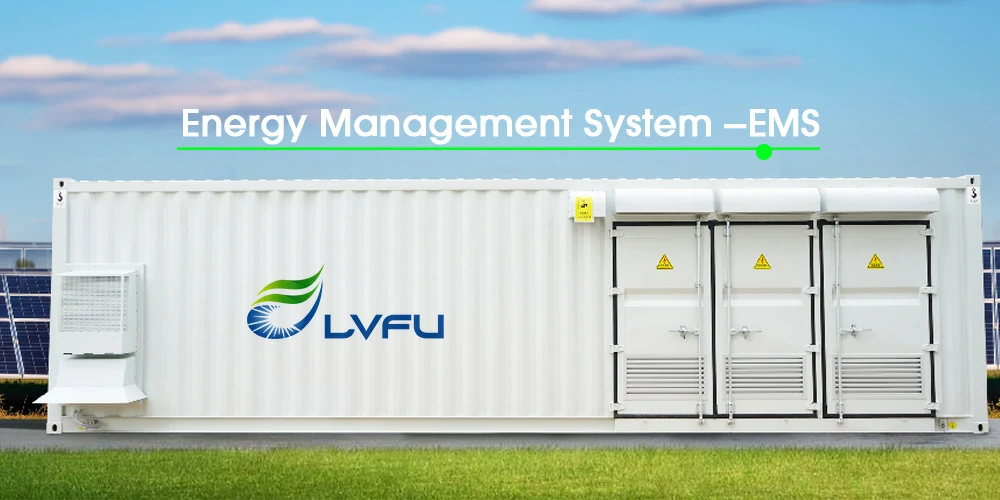
For example, the lvfu commercial and industrial (C&I) energy storage product integrates an EMS module that enables localized intelligent decision-making and cloud-based coordinated dispatch, making it well-suited for malls, factories, and industrial parks.
Global Dispatch and Optimization
First, EMS integrates weather data, grid load, price signals, and battery SOC/SOH to formulate precise peak-valley arbitrage strategies. In a supermarket chain case in Zhejiang, the EMS actively controlled energy storage to charge during off-peak hours and discharge during peak hours based on real-time electricity prices. As a result, the project achieved an annual carbon reduction of 5,000 tons and increased peak-valley arbitrage revenue by 25%.
Safety Protection and Fault Diagnosis
Second, EMS continuously monitors operational data from the PCS, BMS, and fire protection systems. It quickly identifies abnormal conditions such as overcharging or overheating and actively coordinates with the thermal management system for temperature regulation. In a regional supermarket chain case in Hunan, the EMS provided early warning of abnormal battery pack temperatures, successfully preventing a potential thermal runaway incident.
Market Participation and Revenue Maximization
In addition, EMS supports participation in the spot electricity market, ancillary services (frequency and voltage regulation), and virtual power plant trading. For example, the EMS in Tesla’s Megapack system accurately matches 100% of the surplus photovoltaic power generated by large shopping complexes. Ultimately, a single store can achieve annual comprehensive revenue of over 800,000 RMB.
For C&I users, the lvfu EMS also supports VPP aggregation response and demand-side management. In an actual industrial park deployment, it helped the customer reduce annual electricity costs by more than 18% while maximizing self-consumption of on-site solar power and feeding excess energy back to the grid.
