

1. Project Overview
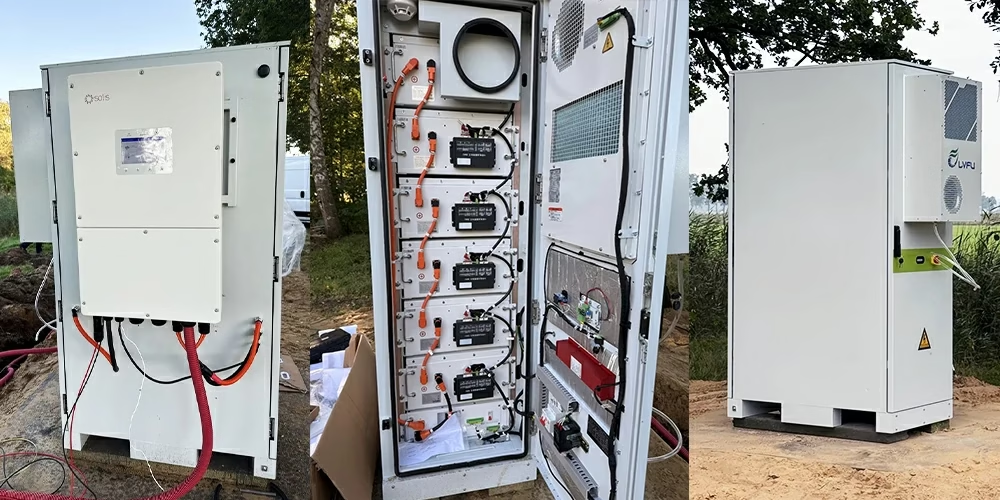
LVFU recently delivered a 108kWh low-voltage battery energy storage system for a project in the Netherlands. The installation combines an LVFU battery storage cabinet with a Solis inverter to support more efficient solar energy management for commercial and agricultural applications.
In the Netherlands, many agricultural businesses, including dairy farms and poultry farms, operate energy-intensive equipment throughout the day. As a result, they need reliable solutions to manage solar generation, electricity consumption, and peak demand.
To address these needs, LVFU worked with its local partner to provide a battery storage solution tailored to the project’s requirements. Beyond supplying the battery system, we also provided technical guidance and project support to help our partner prepare the installation.
2. System Configuration
he project uses an LVFU 108kWh low-voltage battery energy storage system integrated with a Solis inverter.
This configuration allows the system to coordinate battery charging and discharging with solar generation and site electricity demand, subject to the inverter configuration and system design.
The solution provides a practical foundation for businesses that want to increase their use of self-generated solar energy and improve their control over electricity consumption.
Key Project Specifications:
| Item | Configuration |
|---|---|
| Project Location | Netherlands |
| Battery Brand | LVFU |
| Total Battery Capacity | 108 kWh |
| Battery System Type | Low-Voltage Energy Storage |
| Inverter Brand | Solis |
| Application | Commercial & Agricultural Energy Storage |
3. Why 108kWh Battery Storage for Agricultural Businesses?
Agricultural businesses often have substantial electricity demands. Dairy farms, for example, use electricity for milk cooling, ventilation, water pumps, and automated feeding equipment. Similarly, poultry farms rely on ventilation, lighting, climate control, and other essential electrical systems.
Meanwhile, many farms have large rooftop or ground-mounted solar installations. However, solar generation does not always match on-site electricity demand.
A 108kWh battery energy storage system can help address this mismatch in several ways:
1. Increase Solar Self-Consumption
The battery stores surplus solar electricity when generation exceeds immediate demand. Businesses can then use the stored energy when solar production decreases, depending on system settings and available capacity.
2. Support Peak Demand Management
During periods of high electricity consumption, the battery can discharge to support site loads. With appropriate system sizing and energy management settings, this approach can help reduce grid electricity demand during peak periods.
3. Improve Energy Management Flexibility
By coordinating solar generation, battery storage, and electricity consumption, businesses gain greater flexibility in managing their energy use.
4. Make Better Use of Existing Grid Connections
Some agricultural and commercial sites face limitations in their existing grid connections. A properly designed battery system can help manage power demand and make better use of available electrical infrastructure. However, actual results depend on inverter power, load profiles, battery discharge limits, and grid connection conditions.
4. More Than Battery Supply: LVFU’s Partner Support
At LVFU, we understand that a successful energy storage project requires more than battery equipment. System selection, inverter compatibility, technical preparation, and delivery coordination all play important roles.
Therefore, we support our local partners throughout the project preparation process.
Our support includes:
System Selection and Capacity Planning
We help partners evaluate project requirements and select suitable battery storage capacities based on application scenarios and expected electricity demand.
Solis Inverter Configuration Recommendations
We provide inverter configuration recommendations to help partners identify suitable Solis inverter models and system configurations. Our technical team considers battery voltage, communication protocols, charging and discharging parameters, and overall system compatibility.
Technical Documentation and Project Preparation
We provide product specifications, technical information, and relevant documentation to help partners prepare for installation and system integration.
Local Inventory and Shipping Support
We also support partners with available local inventory and shipping arrangements, helping improve product availability and project preparation efficiency.
Through this approach, LVFU aims to become more than a battery supplier. We work with our partners to build practical and reliable energy storage solutions for local markets.
5. LVFU: Your Commercial and Agricultural Energy Storage Partner
The 108kWh project in the Netherlands demonstrates how LVFU supports commercial and agricultural energy storage applications through battery supply, system planning, inverter configuration guidance, and partner services.
As demand for solar energy storage continues to grow, agricultural businesses and commercial facilities need flexible solutions that help them manage electricity consumption more efficiently.
LVFU provides low-voltage and high-voltage battery energy storage products for different applications. We also work closely with local distributors, installers, and system integrators to support project development from product selection to technical preparation.
Looking for a 108kWh battery energy storage solution or a customized C&I battery system for your project?
Contact LVFU to discuss your application requirements.
