
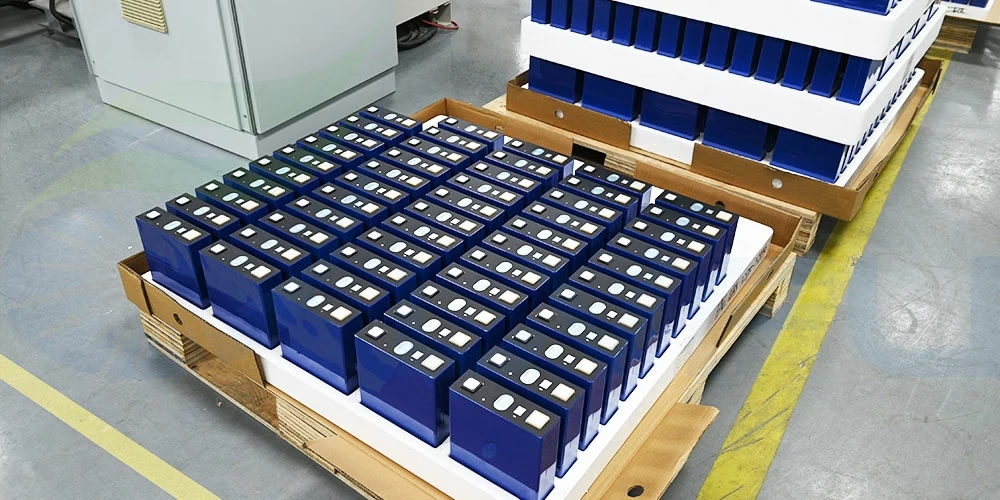
LFP cell
A battery cell serves as the fundamental unit of any battery, forming the core building block for modules and packs. It delivers a typical voltage of 3V to 4V. Manufacturers seal these independent units, which contain the positive and negative electrodes, using materials common to lithium-ion, nickel-metal hydride, or lead-acid chemistries. Inside, separators keep the positive and negative electrodes from making direct electronic contact. The industry primarily packages lithium-ion cells in two forms: hard-shell and pouch. Hard-shell packaging, which typically uses steel or aluminum casings, comes in cylindrical or prismatic shapes, depending on the internal electrode arrangement. For pouch cells, makers mainly use aluminum-plastic film.
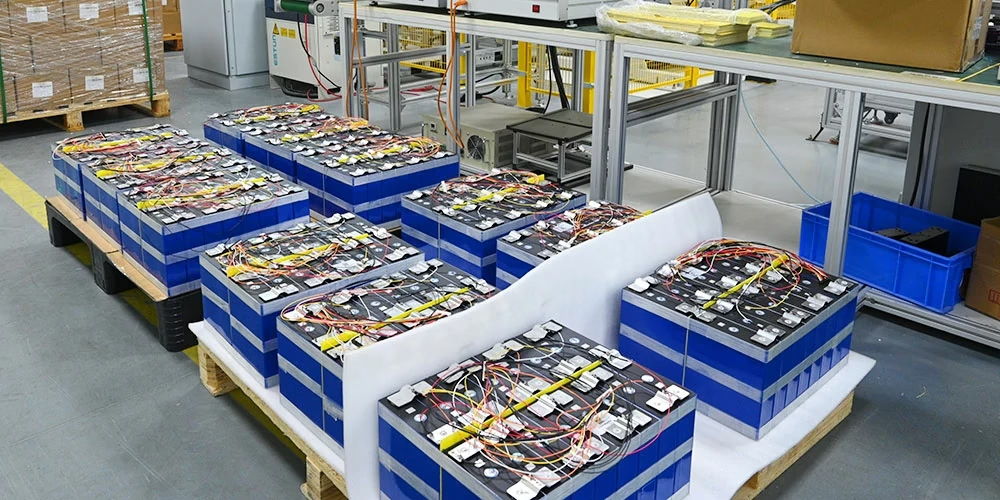
LFP module
Engineers assemble multiple cells into a single physical unit to create a battery module, which achieves higher voltage and capacity. For instance, connecting four cells in series provides a nominal 12V, while arranging cells in parallel increases capacity.
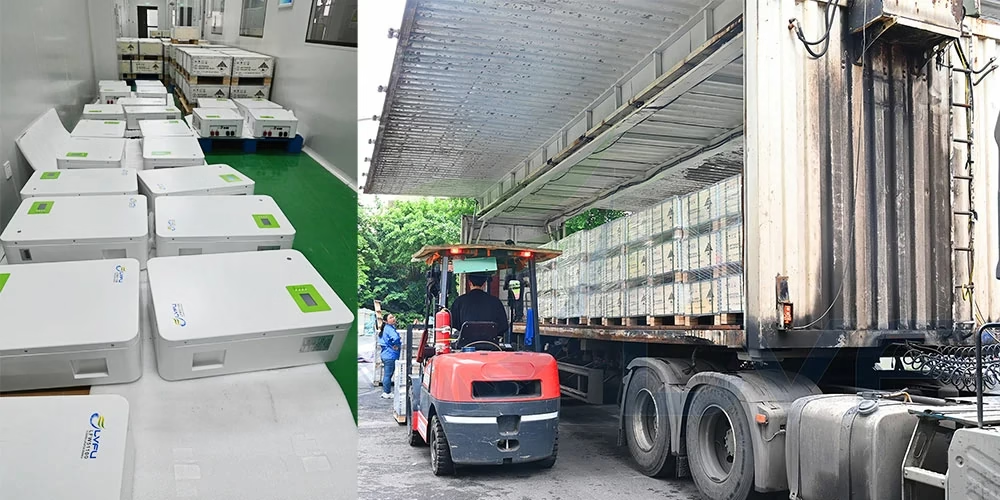
LFP pack
The battery pack represents the final product that manufacturers deliver to customers—what most people call a lithium battery. Builders typically combine multiple modules with a Battery Management System (BMS). The pack process, which involves packaging, assembling, and testing, is essential in lithium battery manufacturing. It assembles cells, protection boards, and wiring into a complete product, ensuring the lithium battery’s safety, reliability, and stable performance. The industry uses two main methods for packing: one employs reliable welding techniques like laser, ultrasonic, or pulse welding, though these make replacement difficult; the other uses flexible metal contacts, which allow easy battery swaps but can sometimes lead to poor connections.