

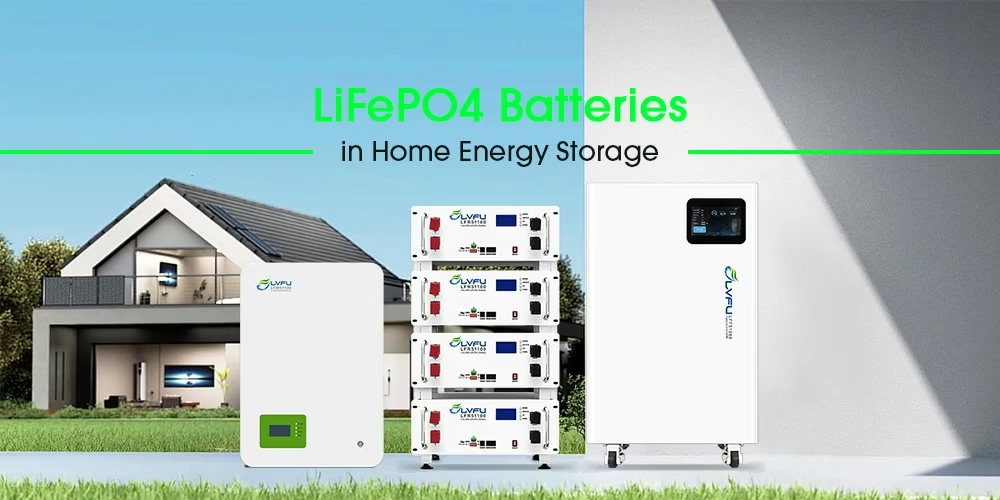
Many home energy storage systems now use lithium iron phosphate (LiFePO4) cells that meet automotive standards. But here’s the thing – how these batteries actually work at home is quite different from how they perform in electric vehicles. If we just copy the electric vehicle design approach, we might end up with some real headaches in daily use.
1. Discharge Patterns Aren’t the Same – Thermal Design Matters
Let’s think about how electric vehicles use their batteries. Most of the time, it’s a steady, moderate discharge. Say your EV gets 400 kilometers on a full charge – if you drive at a consistent 100 km/h, you’d use up that charge in about four hours. That works out to roughly a 0.25C discharge rate.
Home energy use doesn’t follow such predictable patterns. On a hot summer night when your air conditioner, refrigerator, and entertainment system are all running at once, your battery might discharge at close to 1C – meaning it could use up most of its stored energy in just an hour or two. During the daytime when loads are lighter, you might see discharge rates below 0.1C. This constant fluctuation in power demand creates real challenges for battery cooling.
Here’s what happens: during high-rate discharge, cells generate significant heat. If the battery pack isn’t designed to handle this properly, you’ll get uneven temperatures inside the pack. What many people don’t realize is that temperature variations actually worsen the performance differences between individual LiFePO4 cells over time. This “dynamic inconsistency” is one of the main reasons why some home storage systems don’t last as long as expected.
2. The Shallow Cycling Problem – Why Your Battery Might Not Know How Much Energy It Has Left
In everyday home use, these batteries rarely go through complete charge-discharge cycles. Instead, they spend most of their time in what engineers call “shallow cycling” – staying within the middle range of their capacity. While this is easier on the battery physically, it creates an interesting management problem.
LiFePO4 batteries have what’s known as a “flat voltage curve” in their middle charge range. This means the voltage doesn’t change much between about 20% and 80% charge. Your battery management system (BMS) needs to occasionally “see” the high and low voltage extremes to accurately calculate how much energy remains – what we call State of Charge (SOC).
If your system never fully charges or discharges (which is common in home storage), the SOC calculation gradually becomes less accurate. I’ve seen systems that think they have 30% charge left when they’re actually nearly empty, or systems that stop charging at what they think is 100% when there’s still capacity left unused. Some manufacturers address this through improved algorithms, while others build in occasional full cycles specifically for calibration.
3. What You Can Do – Practical Considerations for Homeowners
So what does this mean if you’re considering or already using a LiFePO4 home storage system?
First, ask about thermal management. How does the system handle heat during high-power discharges? Passive cooling (just metal casing) might not be enough for heavier usage patterns.
Second, understand how the system maintains accuracy. Does it require occasional full cycles? Can you initiate a calibration manually if you notice the charge indicator seems off?
Finally, placement matters more than many people think. Installing your battery in a hot garage or confined space without airflow will shorten its life. Regular maintenance checks – even if just visual inspections for swelling or temperature – can help catch issues early.
The bottom line? LiFePO4 technology is excellent for home storage, but it needs to be properly implemented for your specific home energy patterns, not just copied from electric vehicle designs. Taking the time to understand these differences will help you get better performance and longer life from your investment.
