

Dynamic pricing updates electricity prices multiple times daily based on wholesale markets. Users can shift consumption to low-price periods. Negative prices occur when renewables exceed demand – storage and demand response provide solutions. Smart meter deployment varies widely, from nearly 100% in the Nordics to just 2.8% in Germany.
Introduction to Dynamic Electricity Pricing
1. Dynamic Pricing – The Real-Time Barometer of the Power Market
Dynamic pricing differs fundamentally from fixed pricing, which remains constant throughout the contract period. Instead, dynamic prices adjust multiple times each day based on electricity supply and demand. These prices directly track the day-ahead auction market prices on the European Power Exchange (EPEX SPOT). As a result, dynamic prices fluctuate more significantly than time-of-use tariffs or load-variable rates.
Let us briefly distinguish these three pricing models:
- Time-of-use tariffs – In this model, suppliers pre-determine prices for different time blocks, such as day and night rates. This offers limited flexibility.
- Load-variable tariffs – In this case, grid operators lead the adjustment process. They modify prices based on overall electricity demand and grid load conditions. However, a single authority controls these changes.
- Dynamic pricing – This model responds directly to wholesale market signals. It delivers the most frequent and transparent price updates.
The European spot market publishes day-ahead prices at 12:40 on the trading day before delivery (D-1) . At this time, industrial, commercial, and residential users – along with their storage systems – can check the next day’s dynamic prices. Currently, day-ahead prices come in 1-hour intervals. However, starting from June 11, 2025, this granularity will become even finer – 15-minute intervals – matching real-time supply and demand more precisely.
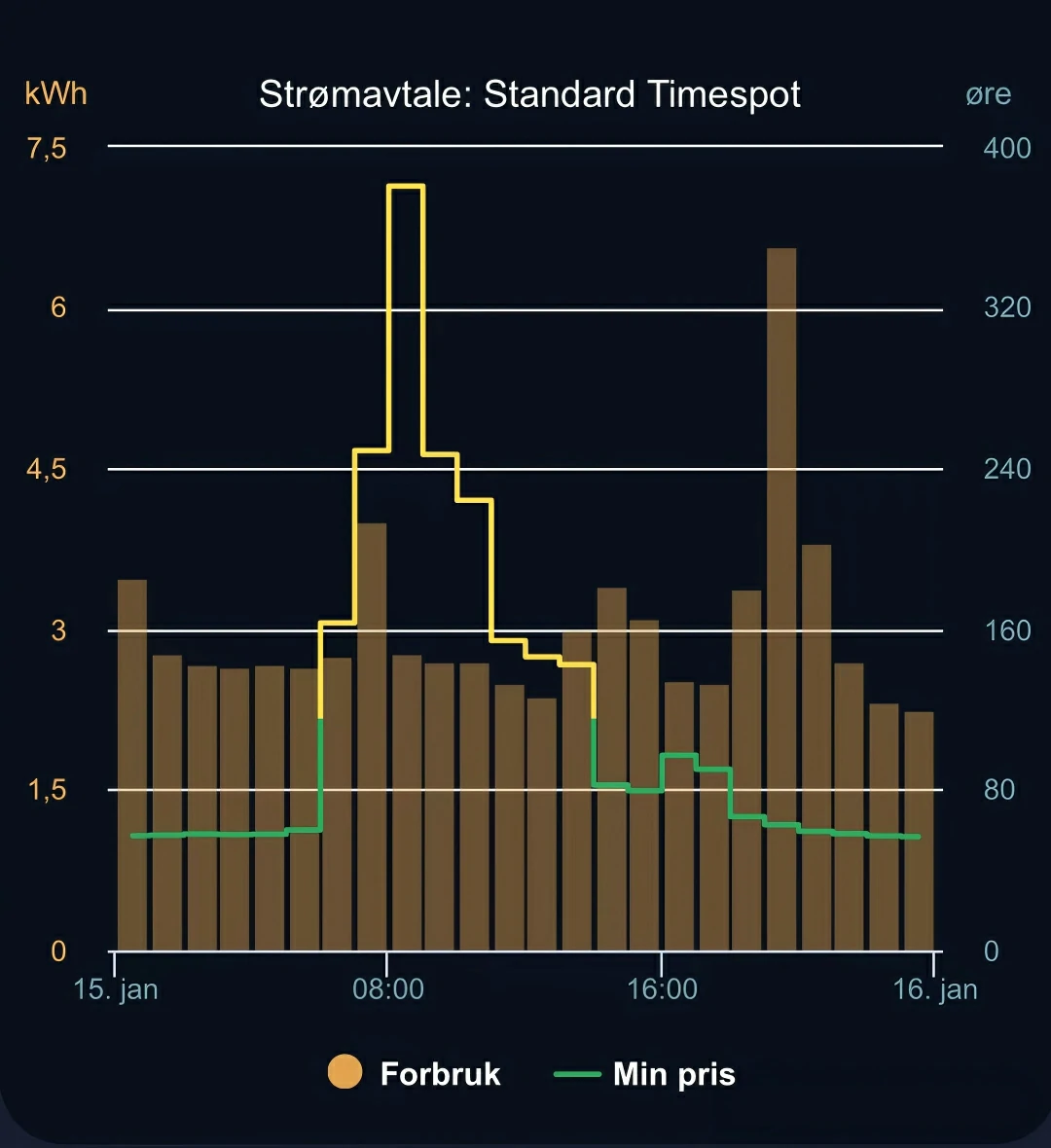
The chart clearly shows the dynamic relationship between power consumption and pricing. During peak demand hours, price fluctuations become more volatile. In contrast, during low-demand periods, prices drop, sometimes even turning negative.
2. Behind Dynamic Pricing – How Negative Prices Emerge and How to Address Them
In 2024, the number of negative day-ahead pricing hours in Europe surged 12 times compared to 2022. In Nordic countries such as Finland, Norway, and Sweden, this increase reached an even more dramatic 20 times. Let us examine the causes and solutions.
Why do negative prices occur?
In essence, negative prices act as a supply-demand warning signal caused by excess green electricity:
- Hydropower overgeneration in the Nordics – During wet seasons, hydropower output often exceeds local demand.
- Surplus solar and wind generation – In countries with significant solar capacity, such as Germany, the Netherlands, and Spain, midday solar output floods the grid, pushing supply far beyond demand. Consequently, prices fall into negative territory – which effectively means utilities pay users to consume electricity.
How can we solve the negative price problem?
We need to pursue solutions on both the production side and the demand side:
- On the production side – store the surplus: Expanding storage facilities – including pumped hydro and electrochemical batteries – allows us to shift excess green power to peak hours.
- On the demand side – absorb the surplus: Activating demand response programs encourages businesses and households to increase consumption when prices are low, thereby absorbing surplus power.
3. The Value of Dynamic Pricing – A Core Tool for Demand-Side Management
Dynamic pricing serves as a key instrument for demand-side management. It optimizes the power system and accelerates the energy transition across multiple dimensions.
- Balancing grid load: When renewable generation falls short – for instance, during calm, overcast periods – prices rise due to supply constraints. In response, users can voluntarily reduce their consumption. This helps prevent grid overload and reduces reliance on short-term peaking plants like gas-fired turbines.
- Saving grid costs: When users adjust their consumption according to price signals, they effectively reduce the need for grid “redundant expansion.” This saves enormous investment in network upgrades.
- Advancing net-zero goals: Through price mechanisms, we can absorb renewable energy more efficiently. This accelerates the transition to a carbon-neutral power system at lower cost.
4. Who Benefits Most from Dynamic Pricing?
According to a report by the German consumer organization VZBV, residential users with annual consumption exceeding 6,000 kWh benefit most – provided they can adjust their consumption flexibly. Those who also own EVs, heat pumps, PV systems, and battery storage gain the greatest advantage.
Further research from ZVEI (the German Electrical and Electronic Manufacturers’ Association) supports this finding. Households using heat pumps or EVs can shift high-consumption appliances to low-price periods to save money. Specifically, heat pump users save about 19% on electricity costs, while EV owners save up to 57%. Suppliers typically publish next-day prices at noon. Users can check these prices via websites or mobile apps. By aligning their consumption with these price signals – concentrating usage in low-price periods – they can effectively reduce their bills.
The Current State of Dynamic Pricing Adoption
1. A Key Factor – Smart Meter Deployment
Previously, large industrial users in Germany could choose dynamic pricing voluntarily, while residential and small-to-medium business customers mostly signed fixed-rate contracts. As a result, wholesale price fluctuations did not affect these users directly. What caused this gap? The core reason lies in smart meter penetration. Traditional meters only record total consumption; they cannot capture real-time usage patterns. Smart meters, however, can record electricity usage by time interval. This enables suppliers to charge customers based on wholesale market prices, making dynamic pricing technically feasible.
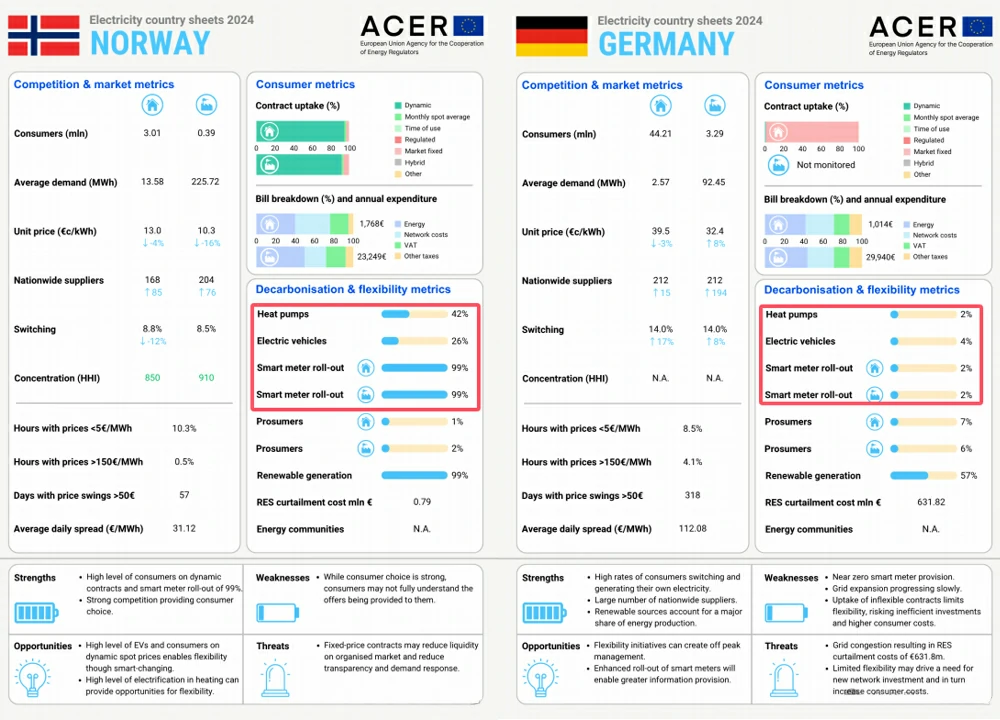
According to the European Union Agency for the Cooperation of Energy Regulators (ACER) – in its July 2025 report – smart meter coverage across European countries shows significant divergence. This directly influences the rollout of dynamic pricing.
- Leading countries: Sweden, Finland, Norway, and Spain have achieved 99–100% smart meter coverage. These meters transmit usage data every 15 minutes, providing efficient support for dynamic tariffs and demand response. In the Netherlands and Belgium, non-household users (such as commercial and industrial businesses) exceed 95% coverage. However, household penetration remains lower – for example, only 30% in the Netherlands – due to privacy concerns and device compatibility issues.
- Lagging countries: Germany has only 2.8% smart meter coverage, the lowest among major EU economies. The key bottleneck here is the mandate for independent security gateways on each smart meter, which drives up equipment and deployment costs and slows progress. Greece and Cyprus fall below 10% coverage, primarily due to outdated grid infrastructure and funding shortages.
2. Dynamic Pricing Suppliers
Several European countries – including Denmark, Germany, Austria, Switzerland, and the UK – have already seen the emergence of suppliers offering dynamic pricing models. The range of available options will continue expanding in the coming years.
Key dynamic pricing suppliers in each country include:
| Country | Suppliers |
|---|---|
| Germany | Tibber, Vattenfall, EPEX SPOT DE, Rabot Energy, aWATTar (subsidiary of Tado) |
| Austria | aWATTar (subsidiary of Tado) |
| Denmark | Nordpool |
| Switzerland | Groupe E (Vario-Tariffs), CKW (subsidiary of Axpo, planning new dynamic tariffs in 2025) |
| UK | Octopus Energy |
Looking at the market landscape, dynamic pricing suppliers fall into two main categories:
Innovative digital solution providers – Companies like Tibber, Tado, and Rabot Energy lead the push for dynamic pricing. They focus on digital services, offering high price transparency and intuitive user apps. This approach builds customer loyalty and helps users respond to price signals effectively.
Established energy suppliers – Beyond these specialists, traditional energy companies such as E.ON and Vattenfall – along with some municipal utilities – have also recognized the market potential of dynamic pricing. They are now launching their own dynamic tariff products, further enriching the choices available to consumers.
3. Policy Developments – Germany as a Key Example
Germany introduced significant electricity market reforms starting January 1, 2025:
- Suppliers must now offer dynamic pricing packages to all users. Consumers can decide whether to accept these offers. This reform gives residential and SME customers access to dynamic tariffs linked to wholesale markets, allowing them to benefit from lower prices during peak renewable generation periods.
- Households consuming over 6,000 kWh per year must install smart meters. The same requirement applies to homes that installed PV systems or heat pumps after 2024, although other households may also request installation. Digital meter usage fees have a capped cost: €20 per year for ordinary households, and €50 per year for homes with controllable devices like heat pumps. Smart meters automatically transmit readings every 15 minutes.
According to the roadmap, at least 50% of German households will have smart meters by 2028. By 2030, this figure will reach 95%. Furthermore, a survey commissioned by the German Electrical and Digital Industry Association found that over 40% of residential PV owners – those also equipped with storage, heat pumps, or EVs – are willing to switch to dynamic pricing.
