

As artificial intelligence expands, data centers are confronting unprecedented power stability issues—slowing construction and delaying grid connections. Two core challenges have emerged: managing extreme load volatility from GPU clusters, and meeting new grid requirements to stay online during disturbances. Traditional UPS and conventional grid-forming battery storage can no longer fully address these issues. In response, EPC Power—the leading U.S. manufacturer of power converters for utility-scale storage—introduces a practical solution: Agile Grid-Forming Battery Energy Storage Systems (BESS).
Managing Extreme Load Fluctuations
AI data centers running GPU-intensive workloads generate highly unpredictable power demands. These rapid swings not only threaten power quality—they can physically damage onsite generators through torque pulsation.
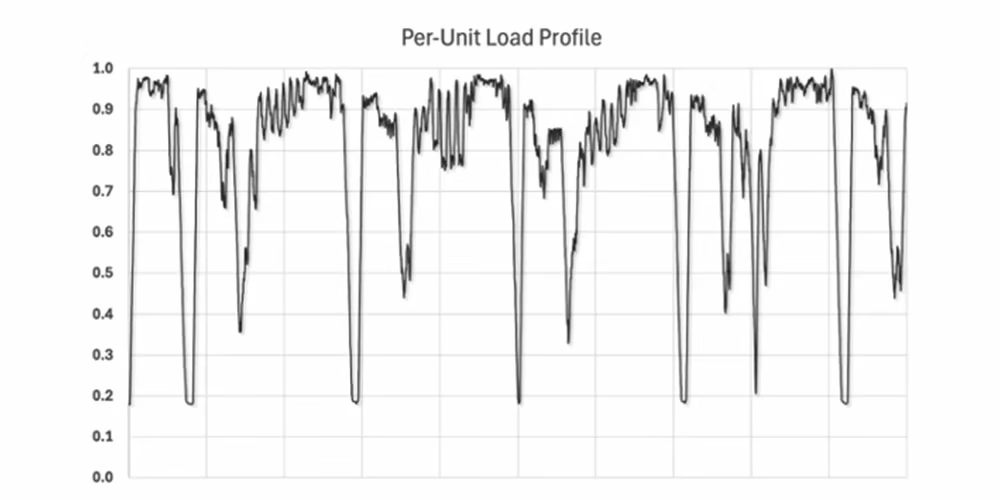
A representative load curve for an EPC PowerGPU server (Source: EPC Power)
When considering how to smooth these fluctuations, operators have several options: integrate storage at the rack level, use the UPS system, or place a BESS at the grid interconnection point.
Rack-level solutions rely heavily on supercapacitors or short-duration storage to clip the sharpest power spikes. While effective locally, this approach is costly and still requires additional, longer-duration storage elsewhere to meet turbine or utility ramp rate limits. The result is a complex and space-consuming setup.
UPS-level smoothing moves storage partially outside the data hall and extends duration to the minute scale. However, most UPS systems aren’t designed to handle severe load spikes or support grid stability during disturbances. What’s more, their long-term reliability under repeated thermal cycling remains uncertain.
A more strategic alternative is smoothing at the grid connection point using a BESS. This approach not only manages load volatility but also unlocks additional grid services like energy arbitrage and frequency regulation.
Standard grid-following BESS solutions introduce significant control delays—often hundreds of milliseconds—which severely limits their ability to cancel out rapid load changes.
Even advanced grid-forming BESS can only compensate for 40–60% of fluctuations, as their response depends heavily on grid strength and operating mode.
EPC Power’s Agile Grid-Forming BESS represents the next evolution. It actively compensates for nearly 100% of load steps, whether operating in a strong grid like PJM or a weak islanded system with local turbines—far outperforming earlier solutions.
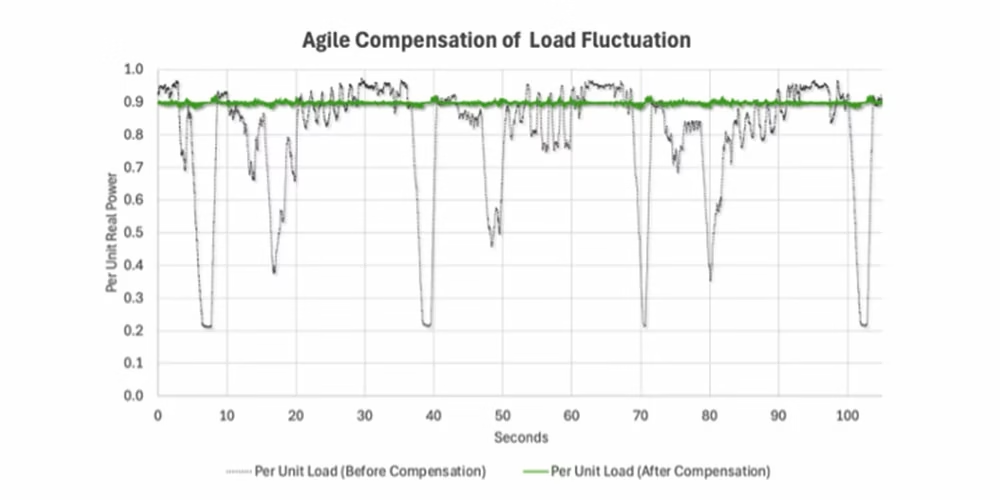
EPC Power load smoothing eliminates fluctuations from power sources (grid, local turbines, etc.) (Image source: EPC Power)
Maintaining Grid Connection During Faults
As gigawatt-scale data centers proliferate, their collective impact on grid stability is drawing regulatory attention. When voltage dips occur, conventional UPS systems typically disconnect the load from the grid—equivalent to suddenly losing a large power plant.
This isn’t just a theoretical risk. In a January 2025 report, NERC highlighted a real-world case where 1,500 MW of data center load dropped off the grid for hours. In response, grid operators like ERCOT are revising interconnection rules, meaning delays or cancellations for projects that fail to comply.
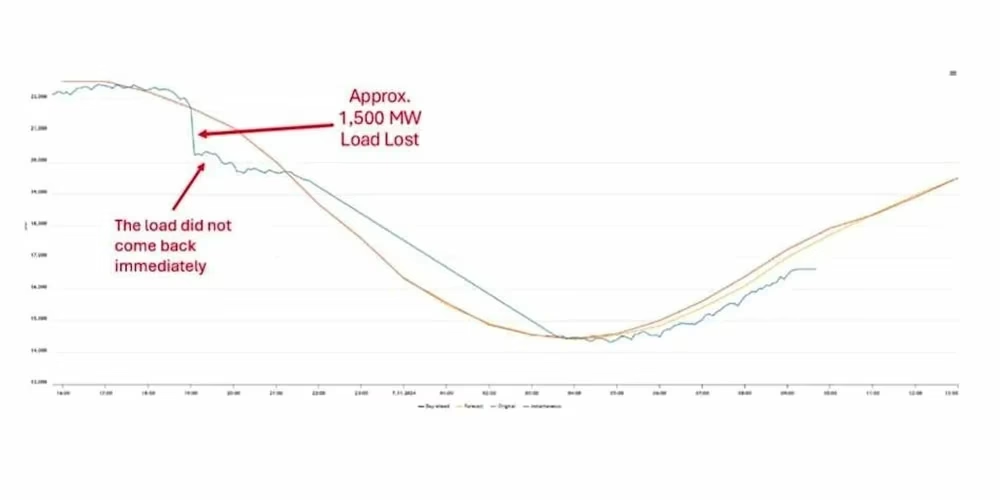
NERC source: “Considering Simultaneous Voltage-Sensitive Load Reduction”, North American Power Reliability Company report, January 2025.
The challenge is clear: data centers must maintain their own reliability while staying connected to the grid during disturbances.
By co-locating an Agile Grid-Forming BESS, data centers can temporarily isolate during a fault while the BESS simulates the load’s last operating setpoint. From the utility’s perspective, the load remains continuous. Additionally, the BESS naturally reduces voltage dips inside the facility, enhancing overall stability.
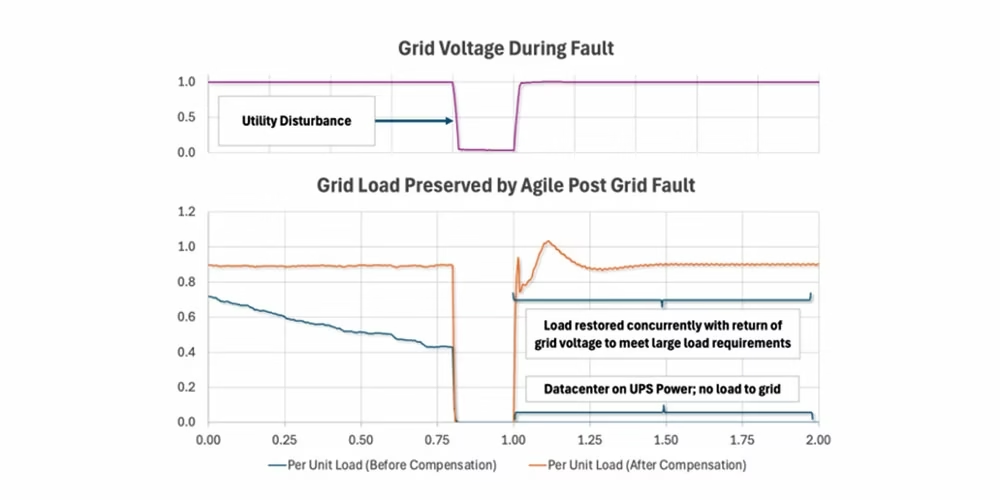
Load smoothing and fault ride-through during grid disturbances (Image source: EPC Power)
Building a Resilient Foundation for AI
AI is reshaping data center power demands, and energy systems must keep pace. EPC Power’s Agile Grid-Forming BESS offers a future-ready solution—delaying rapid response, ensuring grid compliance, and integrating smoothly with both new and existing infrastructure. With this technology, operators can confidently support AI growth without sacrificing reliability or interconnection approval.
