

In the breathtaking waters of Malaysia, luxury cruise tourism is rapidly pivoting toward green and low-carbon transitions. To provide tourists with a quieter, eco-friendly sailing experience while slashing operational fuel costs, we successfully deployed an innovative Photovoltaic-Diesel-Storage (PV-DG-ESS) hybrid microgrid system on a cruise ship performing 3-day, 2-night voyages. Notably, this project integrates a massive 320kWh high-voltage storage system, which not only demonstrates the exceptional performance of storage technology in extreme marine environments but also establishes a new paradigm for maritime energy independence.
Part 1. Project Overview & Challenges
The project targets medium-to-large luxury cruise ships operating in Malaysia. A typical voyage lasts 3 days and 2 nights, meaning the vessel must rely entirely on its own power systems once it leaves the shore-side grid.
The Core Challenges:
- Harsh Marine Environment: High humidity, salt spray corrosion, and continuous mechanical vibration during sailing place extreme demands on the battery system’s structural integrity and protection ratings.
- Noise & Fuel Costs: Traditionally, diesel generators (DGs) run 24/7, which generates significant noise that compromises the tourist experience. Moreover, constant DG operation incurs high fuel expenses and carbon emissions.
- Energy Transmission Loss: Ship cabling is complex. Low-voltage systems suffer significant energy losses during high-power transmission, and heavy cables add unnecessary weight to the vessel.
Part 2. The Solution: 320kWh High-Voltage Rack Energy Storage System
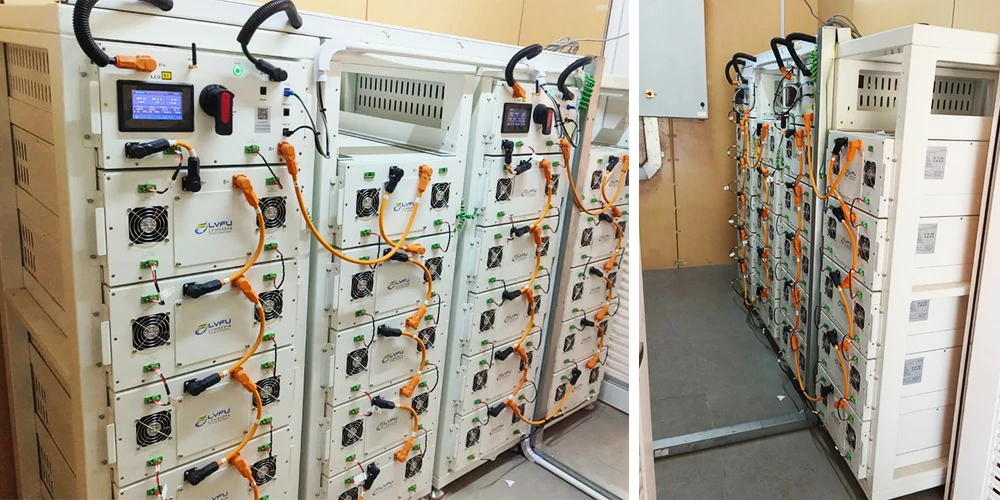
To address these hurdles, the cruise ship integrates the LVFU High-Voltage Rack ESS with a total capacity of 320kWh, intelligently coupled with a solar PV array and a diesel generator.
1. Technical Advantages of High-Voltage Systems
Compared to traditional low-voltage systems, HV storage offers decisive advantages for maritime applications:
- Superior Efficiency: The HVDC architecture significantly reduces energy losses during charging and discharging cycles, thereby boosting overall system efficiency.
- Lightweight Design: Because higher voltage allows for lower current, the system utilizes thinner and lighter cables. This reduction is critical for maintaining the ship’s load balance and fuel efficiency.
- Faster Charging Response: When solar energy is abundant or the DG is active, the HV system absorbs energy more efficiently, substantially shortening charging times.
2. Marine-Grade Protection & Vibration Resistance
The LVFU battery system features a reinforced design specifically engineered to withstand the continuous mechanical vibrations caused by waves. Furthermore, the interior of the racks undergoes professional anti-corrosion treatment to ensure circuit safety during long-term operation in salt-laden air.
3. Smart PV-Diesel-Storage Coupling Logic
The system prioritizes solar energy through an intelligent controller. During the day, the PV array powers the ship’s loads while storing surplus energy in the HV batteries. Specifically, during the night or periods of low sunlight, the batteries take over to enable “Silent Sailing.” The diesel generator acts only as a final backup or starts when the battery State of Charge (SOC) is critically low, consequently minimizing noise pollution.
Part 3. Customer Benefits & Value
- Exquisite Tourist Experience: By utilizing battery power, the cruise ship operates without DGs during the night and while anchored, providing tourists with a silent, odorless, and pure maritime experience.
- Substantial Operational Savings: The synergy between PV and storage significantly cuts fuel consumption, with estimated fuel costs reduced by over 40%.
- Superior Endurance: The robust 320kWh storage capacity comfortably supports core loads during the 3-day voyage, achieving true energy autonomy at sea.
- Green Brand Image: Ultimately, the successful operation of this project enhances the cruise company’s environmental profile, attracting more international tourists who prioritize sustainable travel.
Part 4. Conclusion
In summary, this Malaysian cruise case study proves the immense potential of the LVFU High-Voltage Storage System in the maritime microgrid sector. By intelligently coordinating solar, diesel, and storage power, we have not only solved the challenge of offshore energy supply but also led the maritime tourism industry toward a greener and smarter future.
