

Poland has become one of Europe’s most dynamic battery storage markets. Net-billing settlement, the Moj Prad subsidy programme, volatile electricity prices, and rapid PV growth are pushing both households and businesses toward energy storage. However, before you can store a single kilowatt-hour legally, every system – from a 5 kWh home battery to a multi-megawatt commercial installation – must pass through several layers of certification and registration.
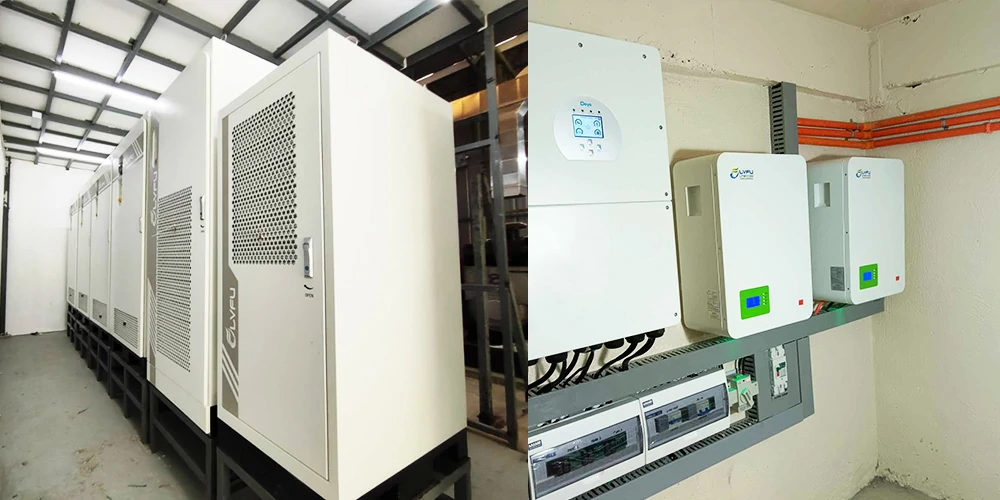
This guide explains, in plain language, which certifications and formal requirements apply to home energy storage and commercial & industrial (C&I) energy storage in Poland as of 2026 – and where projects most often get stuck.
1. How Compliance Works in Poland: Three Layers
Certification for battery energy storage systems (BESS) in Poland is not a single document. It is a stack of three layers, and you must satisfy all three:
- Layer 1 – EU product law: CE marking under the Low Voltage Directive (2014/35/EU), the EMC Directive (2014/30/EU), RoHS, and the EU Battery Regulation (EU) 2023/1542. Without this, you cannot legally place the product on the Polish market at all.
- Layer 2 – Harmonised technical standards: EN/IEC standards that prove the battery, inverter, and system are safe – for example EN IEC 62619 for lithium batteries and EN IEC 62477-1 / EN 62109 for power conversion equipment.
- Layer 3 – Polish national rules: Grid-connection certification under the NC RfG network code and the Polish standard PN-EN 50549-1, notification or registration with the distribution system operator (DSO), and building and fire-safety (PPOZ) requirements.
Here is the most important thing to understand: a CE mark alone does not entitle you to connect a storage system to the Polish grid. Grid connection is a separate certification track governed by Polish network codes.
2. The EU Baseline: CE Marking and Product Safety Standards
Every home or C&I storage system sold in Poland must carry CE marking backed by an EU Declaration of Conformity. The underlying test evidence typically includes:
- EN IEC 62619 – safety requirements for secondary lithium cells and batteries for industrial applications (the core battery safety standard for stationary storage)
- EN IEC 62477-1 – safety of power electronic converter systems; EN 62109-1/-2 – safety of power converters used in photovoltaic systems (for hybrid inverters)
- EN IEC 61000 series – electromagnetic compatibility (emissions and immunity)
- UN 38.3 – transport safety testing for lithium batteries (required for shipping into the EU)
- IEC 62933-5-1/-2 – system-level safety of grid-integrated electrical energy storage systems, including thermal runaway and fire risk considerations
For the battery itself, an additional legal layer now applies – the EU Battery Regulation – which deserves its own section.
3. EU Battery Regulation (EU) 2023/1542: What Applies in 2026-2027
Under the EU Battery Regulation, stationary battery energy storage systems fall under the classification of industrial batteries. This regulation replaces the old Battery Directive and applies directly in Poland – no national transposition is needed. Its obligations phase in over time:
| Date | Obligation for stationary BESS (industrial batteries) |
|---|---|
| 18 Aug 2024 | CE marking and conformity assessment mandatory; Annex V safety requirements for stationary storage (incl. thermal propagation); performance and durability documentation |
| 18 Feb 2026 | Carbon footprint declaration for industrial batteries above 2 kWh (methodology per Commission delegated act) |
| 18 Aug 2026 | Full labelling and marking requirements (manufacturer, chemistry, capacity, manufacturing date, separate-collection symbol) |
| 18 Feb 2027 | Digital battery passport via QR code mandatory for industrial batteries above 2 kWh |
| 18 Aug 2027 | Supply-chain due diligence obligations (cobalt, lithium, nickel, natural graphite) – postponed under Regulation (EU) 2025/1561 |
Two articles matter especially for storage buyers. Article 12 requires documented safety testing of stationary BESS (including thermal runaway behaviour). Article 14 requires that end users can access state-of-health and lifetime data from the battery management system, with a software reset option for repurposing. When evaluating suppliers, ask explicitly for the Annex V safety test evidence and the SoH data access method.
4. Grid Connection Certification: NC RfG, PN-EN 50549-1 and the PTPiREE List
This is the layer that decides whether your system can actually operate. Poland treats a storage system that can inject energy into the grid as a power-generating module, and it must comply with:
- Commission Regulation (EU) 2016/631 (NC RfG) – the European network code for grid connection of generators
- the Polish “Wymogi Ogolnego Stosowania” (WoS) – the national application document of NC RfG, updated in May 2025 (certificates issued against the old WoS 2018 version have been delisted and are only accepted in transitional cases)
- PN-EN 50549-1:2019 – requirements for generating plants connected in parallel with low-voltage distribution networks (Type A and B modules – this covers virtually all home and most C&I systems); PN-EN 50549-2 applies to medium-voltage connections
In practice, you prove compliance through an equipment certificate issued by an accredited certification body – for example PCBC, TUV Rheinland or DEKRA, accredited by the Polish Centre for Accreditation or an equivalent EU body. Two practical rules apply:
- Certificates must be in Polish, bilingual with Polish, or accompanied by a sworn Polish translation – English-only certificates will be routinely rejected by DSOs.
- Manufacturers should register certified devices on the PTPiREE list of certified equipment (ptpiree.pl). If the inverter model appears on this list, the DSO waives the requirement to attach datasheets and certificates to the connection notification, which dramatically speeds up approval.
5. Home Energy Storage: What Is Required in Practice
A home battery installed with a PV system is normally part of a micro-installation (mikroinstalacja, up to 50 kW). The formal path is a notification (zgłoszenie) to the local distribution system operator – PGE, Tauron Dystrybucja, Enea Operator, Energa Operator or Stoen – and requires:
- Form ZM (micro-installation connection notification) with annex ZM-M containing the storage system data (type, capacity, power)
- an electrical schematic of the installation (annex ZM-S for paper submissions)
- the installer’s declaration – the installation must be carried out and signed off by an electrician holding Polish qualifications (SEP certificate)
- equipment certificates confirming NC RfG / WoS compliance – unless the inverter is already on the PTPiREE certified devices list, in which case no technical documents need to be attached
Home users often miss two points. First, under current Polish rules, you may use energy stored in a home battery for self-consumption; direct resale of stored energy from a home system to the grid is not provided for. Second, fire-safety formalities: installations with PV above 6.5 kWp require fire-protection documentation, and the market increasingly expects a fire expert’s opinion (opinia rzeczoznawcy ds. przeciwpożarowych) for larger home batteries as well.
6. C&I Energy Storage: The Additional Requirements
Commercial and industrial systems face everything a home system faces, plus a set of obligations that scale with power:
- Above 50 kW of installed capacity – you must enter the storage facility in the register of energy storage facilities kept by the competent system operator (Art. 43g of the Polish Energy Law).
- Above 10 MW – electricity storage becomes a licensed activity requiring a concession.
- Grid connection – you must obtain formal connection conditions (warunki przyłączenia) issued by the DSO, and the system must meet the operator’s grid code (IRiESD), including communication requirements such as an RS-485 interface and SunSpec protocol support.
- Building law – in-building installations typically require fire-safety consultation; containerised outdoor systems may require a building notification or permit and must fit the local zoning plan (MPZP) or obtain a WZ decision. Noise emissions and land classification (agricultural land may need conversion) also come into play for larger sites.
- Subsidy programmes – they add their own compliance gates. For example, NFOŚiGW funding for large storage requires fire-safety and type-approval evidence as a condition of the grant.
Poland still lacks a single dedicated BESS statute, so C&I projects are approved piecemeal across energy, building, and fire law. Early coordination with the DSO and a fire-protection expert is the single best way to de-risk a project timeline.
7. Fire Safety (PPOZ): The Fast-Moving Layer
Fire safety is currently the least codified – and most closely watched – part of Polish storage regulation. In the absence of a dedicated BESS fire standard, the practical gatekeeper is the certified fire-protection expert (rzeczoznawca ds. zabezpieczeń przeciwpożarowych), whose opinion DSOs, insurers, and building authorities commonly require. Typical design expectations include:
- Install the system in a ventilated room with a certified smoke detector (EN 14604); limit battery banks to 50 kWh per group or separate them by at least 1 metre.
- Avoid installation in escape routes; maintain at least 1 metre clearance from combustible materials; place a 4 kg ABC fire extinguisher in the room.
- For dedicated battery rooms, use fire-rated (EI30) doors and protected cable routes, plus integrate an emergency power-off (EPO) function with the BMS.
- Apply stricter treatment for non-LFP lithium chemistries (e.g. NMC): allow only external-access rooms, avoid basement installation, and include arc-fault protection (AFCI) on the inverter.
A 2025 draft regulation proposed very rigid rules – including 5-12 metre separation distances between storage and buildings – but it was withdrawn after broad industry criticism. However, follow-up work is ongoing. Two conclusions for buyers: first, expect fire-safety requirements to tighten further; second, LFP chemistry with certified thermal stability and a full BMS alarm chain is materially easier to get approved than alternatives.
8. Compliance Checklist: Home vs. C&I Storage
| Requirement | Home Storage (up to 50 kW) | C&I Storage |
|---|---|---|
| CE marking + EU Declaration of Conformity | Required | Required |
| EU Battery Regulation (safety, labelling, passport from 2027) | Required | Required |
| NC RfG / WoS equipment certificate (PN-EN 50549-1) | Required (waived if on PTPiREE list) | Required (waived if on PTPiREE list) |
| DSO procedure | Notification (form ZM + annexes) | Connection conditions + agreement |
| Register of energy storage facilities | Not required | Required above 50 kW |
| Concession (licence) | Not required | Required above 10 MW |
| Installer qualification | SEP-qualified electrician, signed declaration | SEP-qualified; certified design for larger systems |
| Fire safety (PPOZ) | Expert opinion where PV above 6.5 kWp; good practice for all | Fire expert consultation standard; building permit or notification for containers |
| Building / zoning formalities | Usually none for in-home units | Zoning (WZ/MPZP), building notification or permit, noise assessment |
9. Five Mistakes That Delay Polish Storage Projects
- Assuming CE marking is enough – without NC RfG / PN-EN 50549-1 conformity evidence, the DSO will not connect the system.
- Submitting English-only certificates – Polish originals or sworn translations are mandatory.
- Choosing equipment that is not on the PTPiREE certified devices list – this adds weeks of document review to every notification.
- Using an installer without valid Polish SEP qualifications – the DSO will not accept their declaration.
- Involving a fire-protection expert only at the end – late PPOZ findings can force costly relocation or redesign of the battery room.
10. Working with Compliance-Ready Equipment
The fastest Polish projects share one feature: the manufacturer has already done the certification homework. LVFU’s home and C&I energy storage systems are designed for the European market with this in mind – LFP battery platforms tested to EN IEC 62619 and IEC 62933 system safety requirements, hybrid inverters certified against PN-EN 50549-1 with NC RfG equipment certificates, Polish-language documentation, and models registered on the PTPiREE certified devices list. For installers and distributors, that translates into shorter DSO approval cycles and documentation packages that are ready for fire-safety consultations. If you are planning a storage project in Poland, our team can support you with the complete compliance file.
FAQ: Energy Storage Certification in Poland
Do I need a certificate to install a home battery in Poland?
Yes. The system must be CE-marked, and you must notify your distribution system operator before connection. If the inverter is on the PTPiREE certified devices list, the notification is largely a formality; otherwise, you must attach full technical documentation and NC RfG compliance certificates.
Is CE marking enough to connect storage to the Polish grid?
No. CE marking covers product safety and market access. Grid connection additionally requires conformity with the NC RfG network code, the Polish WoS application document, and PN-EN 50549-1, proven by an equipment certificate from an accredited body.
What is the PTPiREE list and why does it matter?
It is the official register of power-generating equipment whose certificates Polish distribution operators have verified. Devices on the list are accepted by DSOs without re-submitting datasheets and certificates, which significantly shortens the connection process.
Does a C&I storage system need a licence in Poland?
Below 50 kW there are no registration duties. Between 50 kW and 10 MW, you must enter the facility in the register of energy storage facilities. Above 10 MW, you require a concession (licence) under the Energy Law.
Are there fire-safety requirements for battery storage in Poland?
There is no single codified BESS fire standard yet, but in practice a fire-protection expert’s opinion is required for most projects, setting conditions on location, ventilation, detection, separation distances, and emergency shutdown. Requirements are stricter for non-LFP chemistries, and further regulation is expected.
When does the EU battery passport apply to energy storage?
From 18 February 2027, every industrial battery above 2 kWh – which includes virtually all home and C&I storage systems – must carry a QR code linking to a digital battery passport with carbon footprint, materials, and performance data.
