

Indonesia’s solar market is transitioning from a phase of abundant resources but slow project execution into a new era defined by accelerated policy momentum and a growing emphasis on delivery capacity. Over the past two years, the government has successively revised rooftop solar regulations, renewable energy power purchase agreement frameworks, and local content requirements. More significantly, the RUPTL 2025–2034—the national ten-year electricity procurement plan—has formally integrated utility-scale solar and energy storage into the country’s long-term power system roadmap.
In August 2026, the Indonesian government officially launched its 100 GWp solar initiative. The first tranche comprises 14 projects across six provinces, totaling 5.3 GWp, with an official target of completing 100 GWp of deployment within three years. This represents a strong national mobilization signal. However, this initiative should not be conflated with the RUPTL ten-year plan. The 100 GWp program far exceeds the current market baseline and spans diverse implementation contexts—including distributed microgrids, centralized plants, diesel replacement, local governance coordination, and cross-ministerial collaboration.
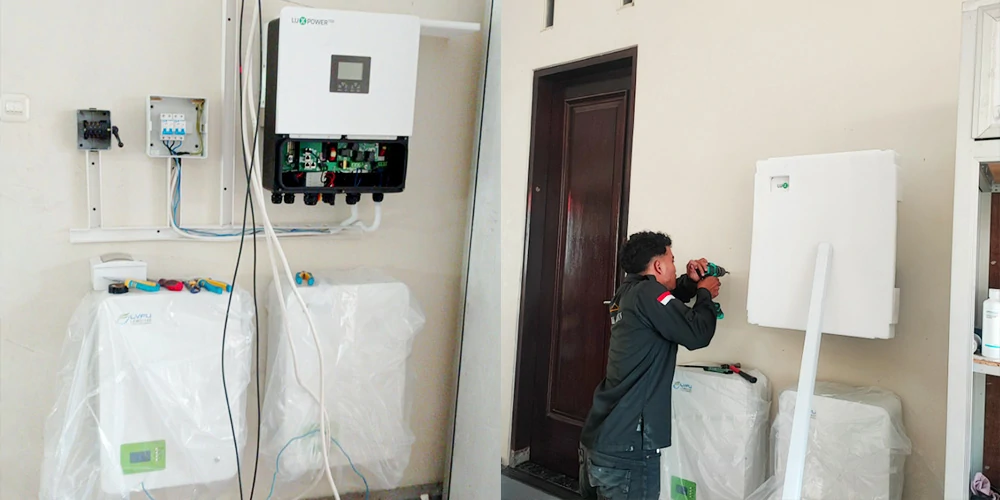
1. Rooftop Solar Policy
MEMR Regulation No. 2 of 2024 marks a decisive turning point for Indonesia’s rooftop solar sector. The regulation removes the previous blanket cap—which limited rooftop PV capacity to 100% of the customer’s PLN-connected capacity. But new projects do not automatically gain unlimited installation rights. They must still satisfy customer-side load matching, five-year rooftop quota allocations, and grid technical assessments, while securing connection approval from the IUPTLU license holder. In practice, PLN remains the single most critical decision-maker and implementation gatekeeper.
A more consequential change affects project economics directly: for newly approved rooftop systems, monthly excess generation no longer offsets the customer’s electricity bill. Projects already operational or approved under the former net-export/net-import metering arrangement can still benefit from transitional provisions. For new projects, however, daytime surplus power can no longer reduce future bills. As a result, the market logic is shifting decisively—from “larger capacity is better” to “higher self-consumption delivers better returns.”
For factories, cold-chain facilities, commercial real estate, data centers, and other users with strong daytime loads, rooftop solar still offers clear value. It reduces daytime power purchases from PLN, helps meet corporate decarbonization goals, and supports supply chain compliance. For residential users or those with low daytime consumption, the elimination of surplus billing settlement will significantly extend payback periods. In such cases, project viability will depend more heavily on load shifting, continued cost reductions, or pairing with small-scale storage.
2. Utility-Scale Solar Policy
The RUPTL 2025–2034 provides the primary reference for understanding Indonesia’s solar and storage market trajectory. IESR’s analysis shows that the plan adds 42.6 GW of renewable power capacity and 10.3 GW of energy storage over the ten-year horizon. Within this portfolio, solar accounts for 17.1 GW—the largest single technology category among all new renewable additions. Hydropower, wind, geothermal, biomass, and nuclear also appear in the same planning cycle.
This shift matters strategically because solar no longer resides in long-term visions or resource potential studies. It now forms part of PLN’s formal project portfolio. For developers, EPC contractors, equipment suppliers, and financiers, the RUPTL offers a pipeline direction—not a ready-made order book. Whether this pipeline translates into real market activity depends on annual tender schedules, PPA execution, land acquisition and permitting progress, interconnection design, financial close, and commercial operation dates.
3. Energy Storage Policy
Battery energy storage systems (BESS) in Indonesia are moving from pilot demonstrations into system-level planning. The RUPTL includes 10.3 GW of storage capacity, covering both pumped-hydro and battery technologies. In addition, a joint storage financing workshop—which the IEA, the Ministry of Energy and Mineral Resources, and PLN co-hosted in 2025—indicated that RUPTL-linked plans target up to 6 GW of standalone utility-scale BESS and 3.6 GW of co-located solar-plus-storage by 2035.
Yet a “GW-scale target” does not automatically create a bankable storage market. In practice, project financiability usually turns on four core questions: battery duration, the dispatch entity, the specific system services the asset will provide, and the corresponding revenue streams. Multiple value streams—capacity reserves, frequency regulation, peak shaving, emergency backup, time-shifting arbitrage, and curtailment mitigation—can collectively strengthen storage economics. However, only when procurement rules, dispatch agreements, and payment mechanisms explicitly incorporate these services can BESS evolve from planning figures into a replicable asset class.
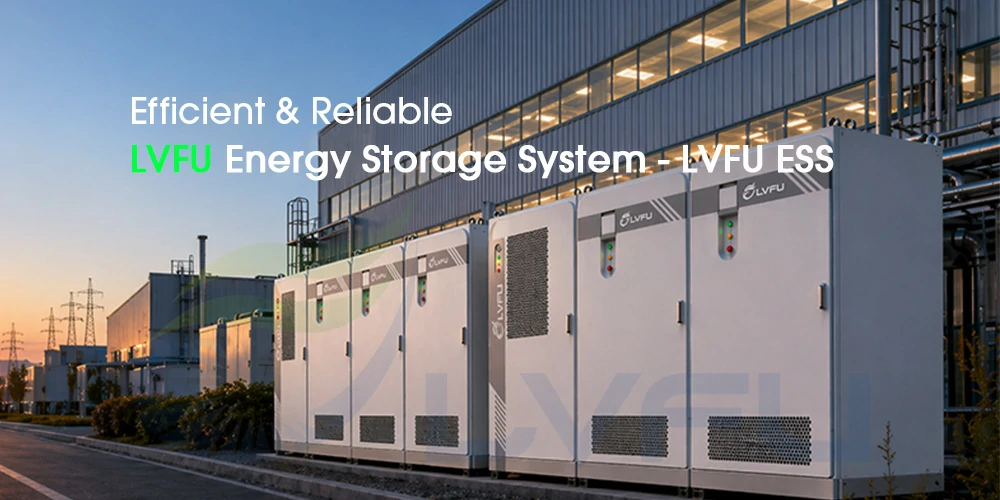
As of September 2026, Indonesia’s solar and storage policy landscape has taken on a much clearer shape. Rooftop solar is moving toward quota-based management and self-consumption optimization. The RUPTL provides a ten-year project pipeline for utility-scale solar and storage. PPA frameworks, government guarantees, and local-content exemptions are gradually improving project bankability. At the same time, the 100 GWp initiative sends a powerful national-level signal of commitment. Looking ahead, the core competitive differentiator will no longer be installed capacity alone, but rather the end-to-end project delivery capability. Market participants who can simultaneously navigate PLN procurement processes, grid interconnection requirements, existing coal power contract structures, storage revenue models, and the operational realities of an archipelagic engineering environment will be best positioned to identify and capture the real opportunities emerging across Indonesia’s solar market.
🎨 Contact Lvfuenergy to Get Free Energy Storage Solutions
