

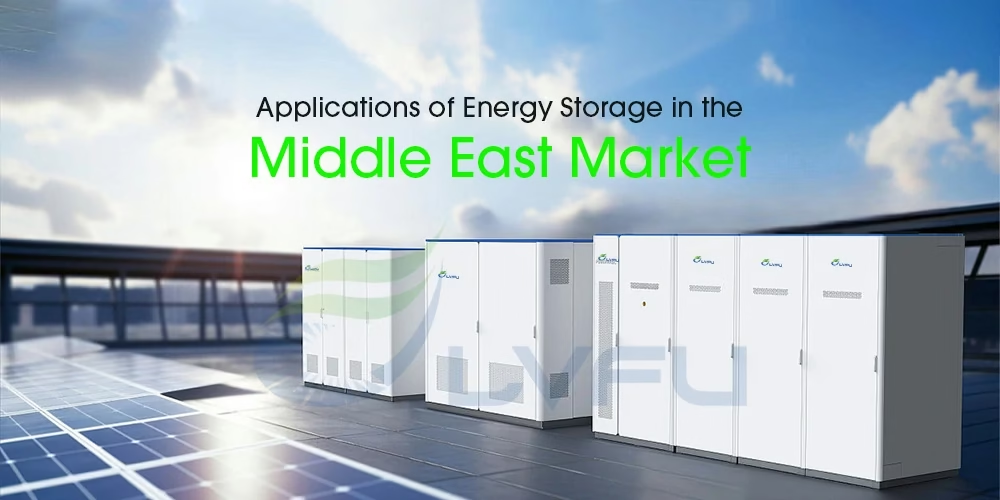
Energy storage applications in the Middle East primarily focus on addressing the intermittency of renewable energy and enhancing grid stability. Application scenarios encompass large-scale power station storage (such as molten salt thermal storage and battery energy storage), emerging smart city energy management (e.g., NEOM), and supporting energy transition alongside mineral resource development. Technologically, large-scale battery energy storage (BESS) and thermal energy storage (TES) dominate. Chinese enterprises (such as Huawei and Sungrow) play pivotal roles in power conversion systems (PCS) and system integration, aiming to achieve energy diversification and net-zero targets.
Primary Application Scenarios
Large-scale utility-scale energy storage: Leveraging the Middle East’s abundant solar resources, battery energy storage (BESS) and thermal energy storage (TES) systems capture surplus daytime electricity for release during night-time or overcast periods, maintaining grid stability.
Smart cities and sustainable projects: Initiatives like Saudi Arabia’s NEOM “city of the future” require advanced energy storage solutions to deliver round-the-clock clean energy supply.
Microgrids and Off-Grid Power: Providing reliable clean energy assurance for remote areas or specific projects (e.g., the Red Sea Project).
Supporting Energy Transition: Balancing renewable energy fluctuations through storage to support nations like Saudi Arabia and the UAE in achieving objectives outlined in initiatives such as the National Energy Strategy 2050. Key Technologies and Projects
Thermal Energy Storage (TES): Dubai’s Mohammed bin Rashid Al Maktoum Solar Park employs a 150 MW molten salt TES system for continuous power generation.
Battery Energy Storage Systems (BESS): China’s Sungrow Power Supply and Algihaz signed a 7.8 GWh ultra-large-scale storage project – one of the world’s largest – underscoring BESS’s significance.
Technological Diversification: A multi-path development approach spanning lithium-ion batteries to vanadium flow batteries.
Chinese Enterprise Participation and Advantages
EPC/System Integration: Chinese firms such as Huawei, Sungrow, and China Energy Engineering Corporation play pivotal roles in the Middle East, supplying PCS and integrated system solutions as bundled offerings.
Localised Operations: Chinese PV enterprises (e.g., JinkoSolar, Trina Solar) actively establish manufacturing facilities in Saudi Arabia, aligning with local energy transition requirements.
Resource Advantage: Saudi Arabia possesses key minerals like lithium and copper, striving to develop a domestic battery materials supply chain.
Energy Transition Goals: Initiatives such as Saudi Arabia’s Vision 2030 and the UAE’s National Energy Strategy 2050 drive large-scale renewable energy and energy storage deployment.
Low Renewable Energy Costs: The Middle East possesses strong capabilities for low-cost renewable energy production.
Grid Stability: Addressing the intermittency of renewable energy to enhance grid reliability.
