

This article explains the differences between a 48V 100Ah battery and a 51.2V 100Ah battery and helps you choose the right option.
| Characteristic | 48V 100Ah Lithium Iron Phosphate Battery | 51.2V 100Ah Lithium Iron Phosphate Battery |
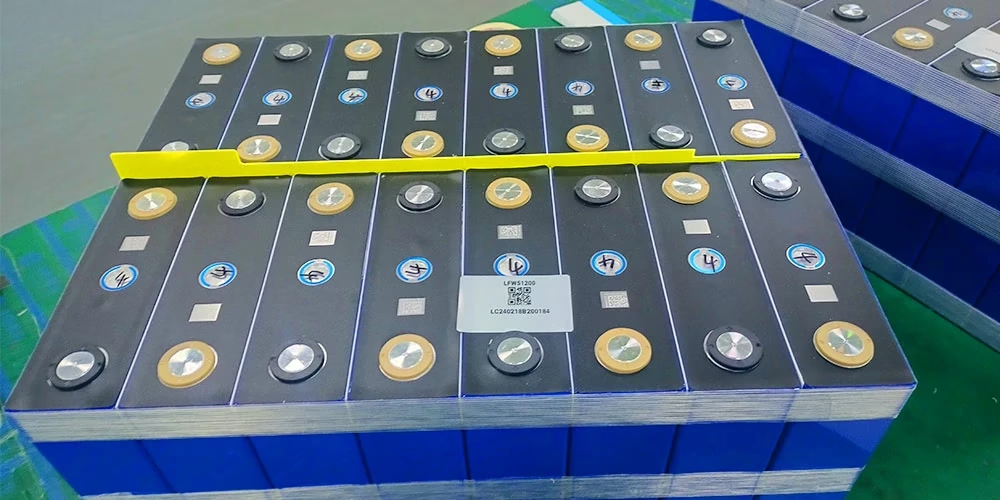
| Cell structure | Manufacturers typically connect 15 lithium iron phosphate (LiFePO₄) cells in series to form a 48V battery (3.2V × 15 = 48V). | Manufacturers typically connect 16 lithium iron phosphate (LiFePO₄) cells in series to form a 51.2V battery (3.2V × 16 = 51.2V). |
| Nominal voltage | 48V | 51.2V |
| Full voltage | Approximately 54.75V (15 * 3.65V) | about 58.4V(16 * 3.65V) |
| Discharge cutoff voltage | Approximately 37.5V (15 * 2.5V) | about 40.0V(16 * 2.5V) |
| Energy (theoretical value) | 48V * 100Ah =4.8 kWh | 51.2V * 100Ah =5.12 kWh |
| System compatibility | The traditional 48V lead-acid system standard allows these batteries to directly replace lead-acid batteries without major system changes. | Modern system standards optimize designs specifically for 51.2V lithium battery systems. |
If you are building a new system—such as a home solar energy storage system—choose a 51.2V 100Ah battery. First, confirm that your equipment, including inverters and chargers, explicitly supports 51.2V lithium batteries or operates within a voltage range that fully covers their charge and discharge curve. In addition, if you are aiming for higher system efficiency and more complete battery utilization, and you are prepared to ensure full compatibility across the entire system, a 51.2V configuration is the better long-term choice.
