Smart Energy Storage System Solution for Palm Oil Mill
The palm oil mill is mostly located deep in the equatorial jungle, and its operations are heavily dependent on a stable and economical energy supply. The business encompasses the entire production chain from fruit harvesting to oil packaging.
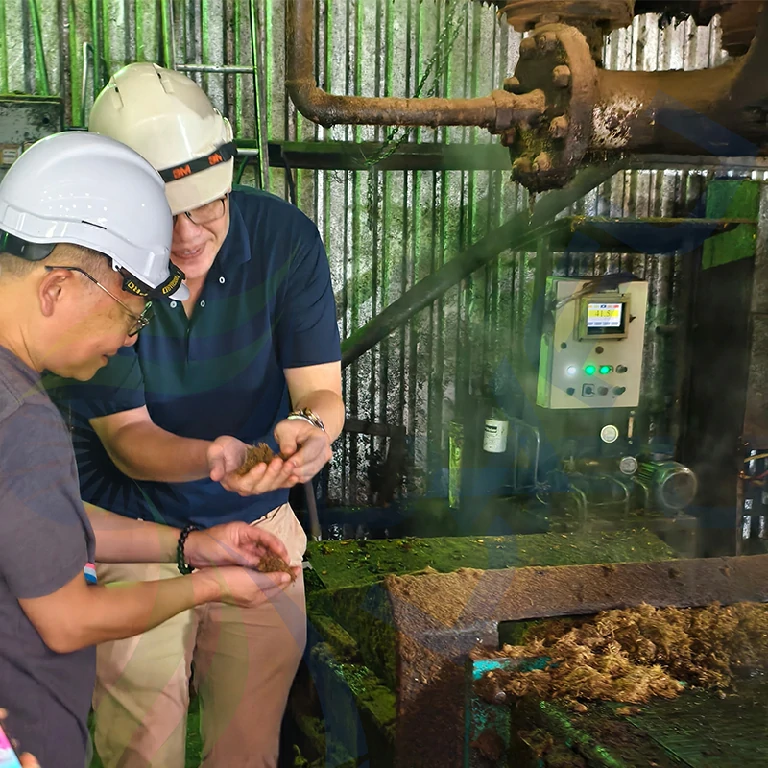
Palm-oil-production-line
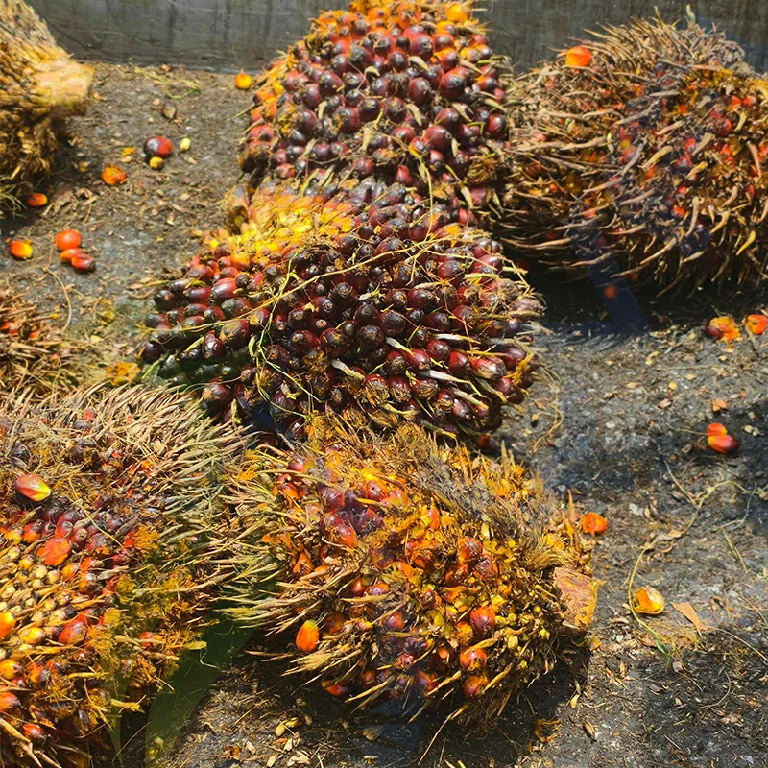
Palm-fruit
The LVFU Energy Cabinet
Turbine B-HUB
To better meet the complex multi-energy integration needs of palm oil mills, LVFU has launched the new-generation Turbine B-Hub.
Traditional BESS solutions are typically designed for grid or photovoltaic connections, proving inadequate for efficiently integrating volatile power sources like diesel generators—let alone adapting to the unique steam turbines used in palm oil mills. Historically, achieving such integration relied on high-cost custom projects.
Our Turbine B-Hub fundamentally changes this landscape. Capable of seamless switching among diverse power sources—including diesel generators, PV systems, the grid, BESS, steam turbines, and even wind power—within 20 milliseconds, it allows users to flexibly configure switching strategies via an intelligent energy management platform. This ensures the most economical energy mix is always utilized, significantly reducing customers’ overall electricity costs.
The Design of cabinet depends on request of project need
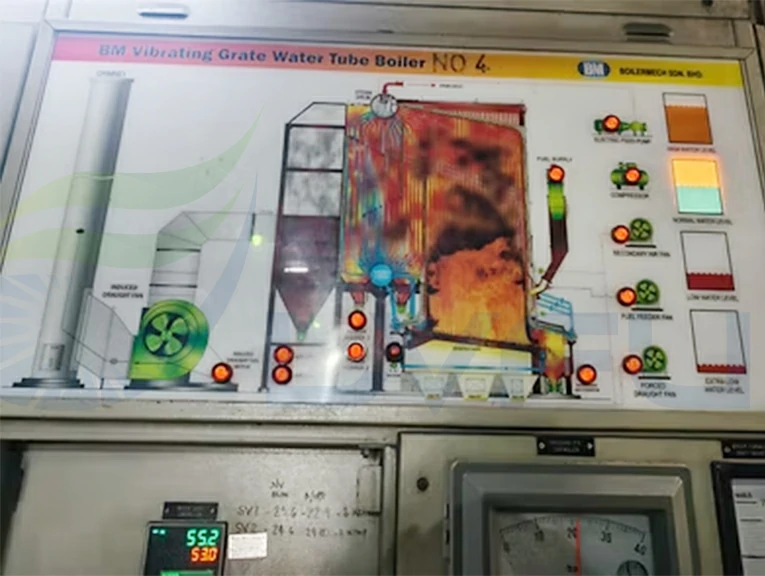
Plam Oil Steam boiler and turbine
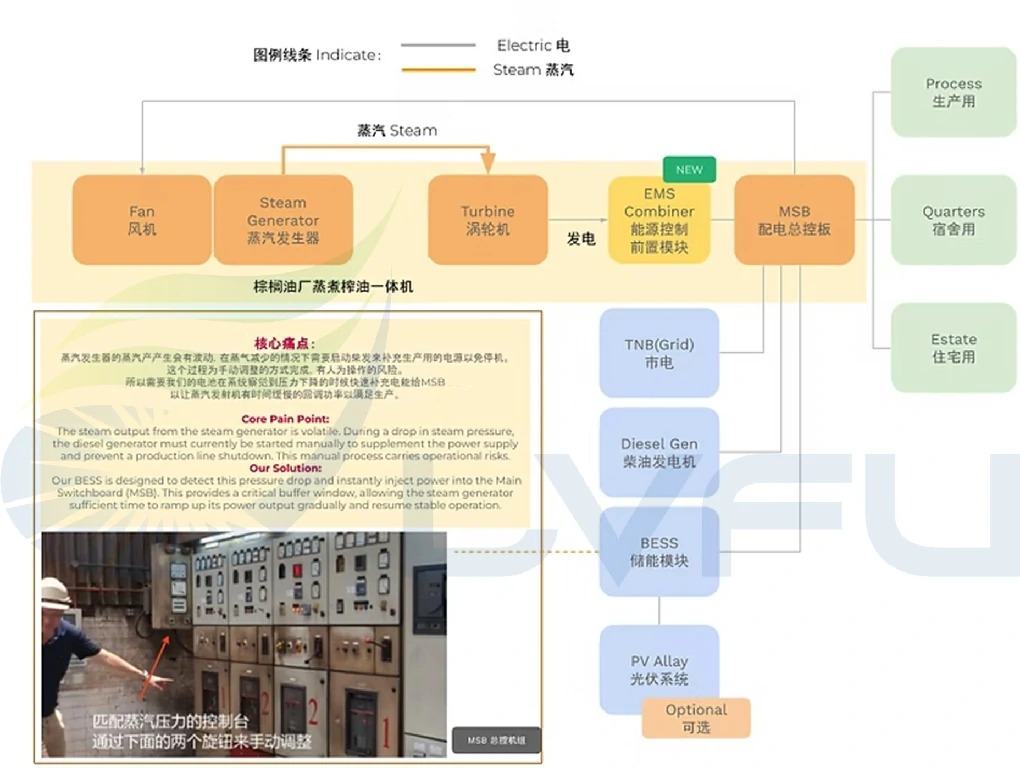
The steam turbine system in a palm oil mill is a highly integrated multi-functional unit. Its operational process is as follows: First, an electrically driven blower supplies air to the boiler; the boiler uses the oxygen provided by the blower to burn palm waste, heating water to generate steam, which is used for sterilizing palm fruit. Subsequently, the steam is directed to the turbine, driving it to generate electricity, with part of the power generated fed back to drive the blower, forming a localized energy cycle.
The core challenge of this system lies in the fact that when steam supply is unstable or insufficient, the turbine’s output power decreases, which may result in the generated electricity being inadequate to meet the basic power demand of the blower. This in turn affects the stability of boiler combustion and steam generation, creating a negative feedback loop.
The traditional solution relies on diesel generators to supplement power supply. However, this method has significant drawbacks: the switching process depends on manual operation, leading to considerable response delays; diesel generators require a relatively long startup time, during which considerable energy waste and carbon emissions occur.
The core challenge of this system lies in the fact that when steam supply is unstable or insufficient, the turbine’s output power decreases, which may result in the generated electricity being inadequate to meet the basic power demand of the blower. This in turn affects the stability of boiler combustion and steam generation, creating a negative feedback loop.
The traditional solution relies on diesel generators to supplement power supply. However, this method has significant drawbacks: the switching process depends on manual operation, leading to considerable response delays; diesel generators require a relatively long startup time, during which considerable energy waste and carbon emissions occur.
To address these issues, the Battery Energy Storage System (BESS) can provide efficient and automated power support. When turbine output is insufficient, the BESS can seamlessly inject the required power within milliseconds, ensuring continuous operation of the blower and preventing production interruptions. Meanwhile, when the turbine generates excess electricity, the BESS can store the surplus power, enabling optimized recycling and efficient utilization of energy within the plant.
Main Menu
We use cookies to ensure that we give you the best experience on our website. If you continue to use this site we will assume that you are happy with it.