

Fire protection system introduction
The lvfu ess fire protection system in this 261kWh ess energy storage cabinet includes a perfluorhexanone fire extinguishing system and a water sprinkler system.
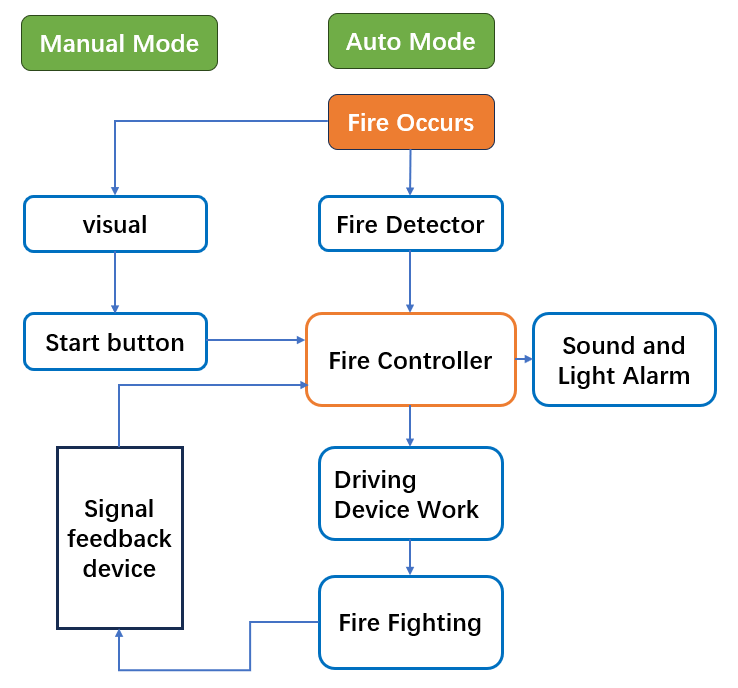
The perfluorhexanone fire extinguishing system provides both PACK-level and cabinet-level protection. At the PACK level, we use a passive protection approach. When a fire occurs inside a battery pack, the flames ignite the thermal fuse line of the module, which then activates the fire extinguishing device to suppress the fire, ensuring independent protection for the battery pack. For cabinet-level protection, we apply an active protection strategy. A five-in-one composite fire detector installed inside the energy storage cabinet monitors abnormal signals such as CO, H₂, VOC, temperature, and smoke. This detector connects to the fire controller via the CAN bus. We also equip the cabinet with two 0.5-liter non-storage pressure perfluorhexanone fire extinguishing devices. Once a battery pack experiences thermal runaway, the detector sends an alarm signal to the fire controller, which then triggers the fire extinguishing device. The perfluorhexanone extinguishing agent discharges through a nozzle directly into the battery cabinet to stop the fire from spreading.
We also include a manual fire extinguishing switch in the energy storage cabinet. If on-site staff detect a fire but the fire controller has not yet activated—either because it hasn’t reached the alarm threshold or due to a system delay—they can press this manual switch to immediately start the fire extinguishing device.
The flowchart is as follows:
The water sprinkler system is composed of sprinklers, pipe networks, water inlet interfaces and other parts. When a fire occurs in the system, the project water source can be used to extinguish the fire.
Fire Safety Guidelines
When receiving a fire warning:
- First, it is necessary to identify whether the fire (early warning) has actually occurred.
- Immediately cut off the power supply other than fire protection
- Observe whether the fire extinguishing system is operating normally. When operating normally, you can press the fire manual switch to ensure safety.
- Relevant staff should also prepare for personnel evacuation, isolation of combustibles, and manual fire suppression.
- Dial fire alarm number to clearly inform the fire location, fire, and equipment type. Synchronously notify the person in charge of unit safety, activate emergency plans, and coordinate internal rescue.
When the fire is not under control, professionals can be manually connected to a water fire protection system that uses an external water source as the extinguishing medium.
Set up a warning line to prevent a reignition.
