

This article provides an in-depth analysis of the core principles, applicable scenarios, and advantages of three types of home solar inverter, helping home users quickly select the right system.
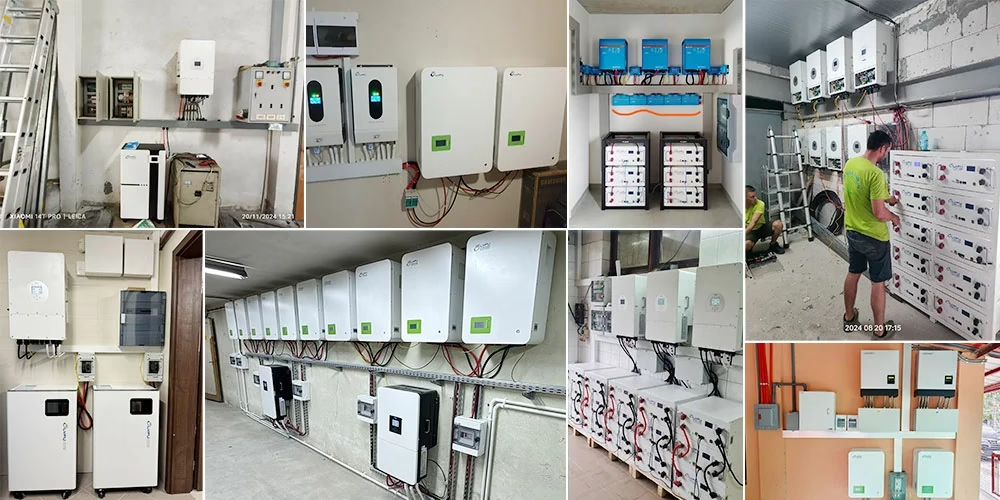
1. Grid-connected Inverter
(1) This type of inverter converts the direct current (DC) generated by photovoltaic power generation into the alternating current (AC) required for household use and subsequently feeds this electricity into the grid. Essentially, it operates by relying on a connection to the main power grid. For instance, after generating electricity during the day, the system feeds the power directly into the grid.
(2) Furthermore, it promotes energy saving. Households can use their self-generated electricity to reduce their electricity bills, and they can also sell any surplus power to the grid to earn income or receive subsidies.
Applicable Scenarios
(1) Rural residences: These systems prioritize using photovoltaic power for the household’s own consumption, and then sell any excess electricity to the grid.
(2) Stable grid areas: This setup requires a grid connection and is therefore suitable for areas with a stable power supply.
In summary, this type is ideal for areas with grid access, helping families earn from and reduce their electricity bills! Currently, most household photovoltaic systems in China use this grid-connected inverter. However, rural grids are now beginning to find it difficult to absorb all the excess power being fed back.
2. Off-grid Inverter-home solar inverter
(1) Independent power supply: Completely independent of the grid. The electricity generated by photovoltaic power generation is directly stored in batteries for household use.
(2) Safe and reliable: When the grid is down, the system can continue to supply electricity to the household, ensuring uninterrupted power supply.
Applicable Scenarios
(1) Remote areas/no power grid, such as mountainous areas, islands, deserts and other places without power grid coverage.
(2) Emergency backup, suitable for places with unstable power grids or frequent power outages.
In summary, manufacturers primarily produce this type for export, with currently more exports going to Africa. Relatively few are produced for the domestic market.
3. Hybrid Inverter-home solar inverter
(1) Grid-connected + off-grid dual function, can connect electricity to the grid and store electricity in batteries for use during power outages;
(2) Embedded small EMS function, the system can set charging and discharging strategies, can save electricity costs according to changes in grid electricity prices, and can also provide emergency power when the grid is out of service.Applicable Scenarios
Applicable Scenarios
(1) Versatile, suitable for most residential scenarios.
(2) Unstable power grid, suitable for places where the grid fluctuates or power outages are frequent.
In summary, the hybrid inverter offers both grid-connected and off-grid capabilities, allowing for flexible switching between modes to adapt to various power usage scenarios! Currently, companies like Huawei and Siger are actively promoting this type of residential energy storage system in China. Furthermore, most of the products exported to developed regions such as Europe, North America, Australia, and New Zealand are of this hybrid type.
