

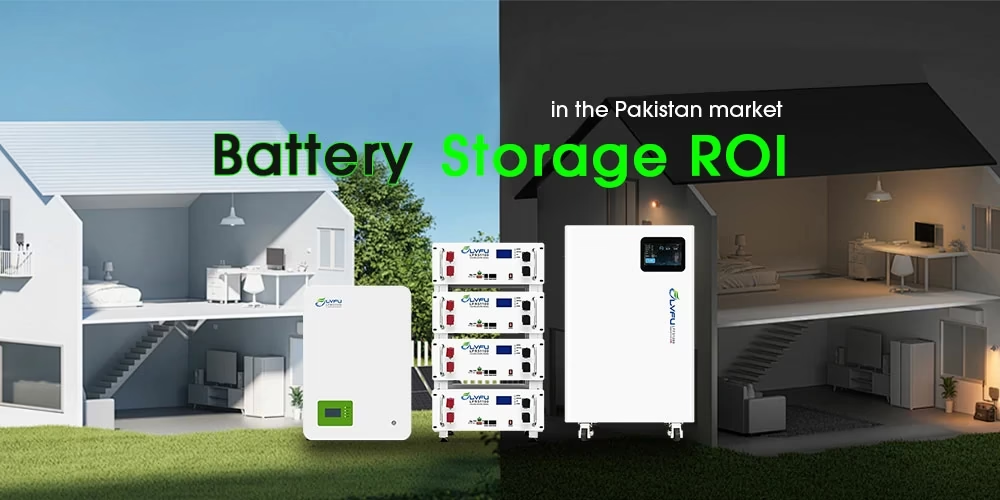
Energy storage systems first emerged as a response to power shortages and inefficient electricity utilization. Their core mission was straightforward: to ensure a stable and reliable power supply for industries, businesses, and homes. By capturing electricity when it was plentiful and releasing it when needed, these systems acted as a crucial buffer for the grid.
However, the global energy landscape has shifted dramatically. Widespread energy shortages and evolving infrastructure have driven electricity costs steadily upward. Take Pakistan, for instance—a key market where electricity prices have nearly doubled in just four years. This steep increase places a heavy burden on both household budgets and business operating costs. Consequently, the role of energy storage is transforming. It’s no longer just a backup solution; it’s becoming a strategic investment to actively combat rising bills.
So, how does this investment work in practice? Essentially, there are two primary methods to calculate the payback period. The first and most direct approach is peak-valley arbitrage. Here, you charge the battery when electricity rates are at their daily lowest (off-peak) and discharge power when prices peak. This buys low, sells high model is simple in concept, but it requires establishing a formal grid-connection agreement with your local utility company.
The second common method integrates with solar power. You store excess solar energy generated during sunny daylight hours instead of sending it all to the grid. Then, you use that stored energy in the evening or at night, directly offsetting the need to buy expensive power from the utility. Both strategies are highly effective for cost recovery, with typical payback periods ranging from one to two years.
Now, let’s talk about the heart of the system: the battery. Quality is paramount. Consider LVFU batteries, which come with a 7-year warranty. For a customer in Pakistan, this means that after the initial payback period, you could enjoy up to six additional years of pure savings—a very attractive prospect. Here’s a crucial rule of thumb: a higher upfront cost usually signals better quality, a longer lifespan, and a greater overall return on investment (ROI).
Conversely, some extremely cheap batteries are a false economy. They often suffer from poor quality, short lifespans, and disappointingly low ROI. Therefore, choosing a battery with strong quality assurance is critical. While the initial investment might be slightly higher, the long-term financial returns are significantly greater, making it the smarter choice for your energy and financial future.
