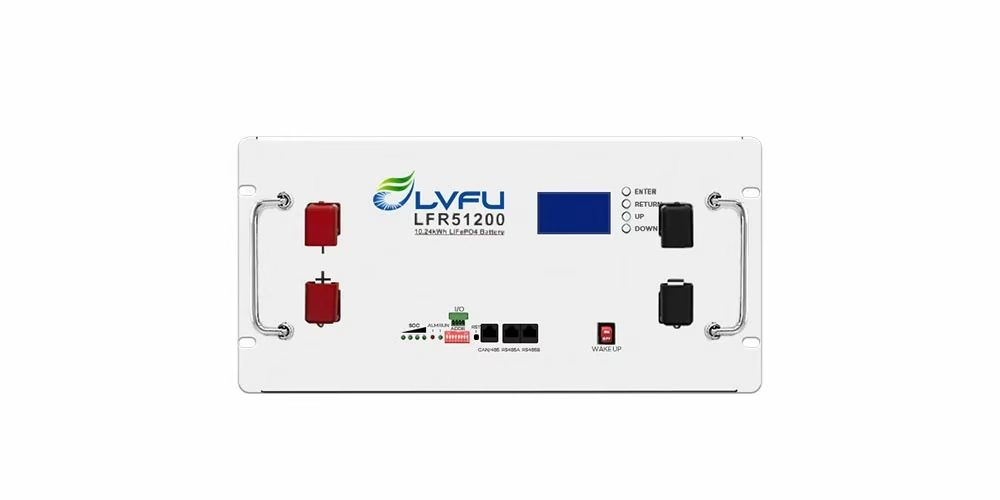

More and more homeowners are choosing 10kWh home battery systems for their energy storage needs.
So, why exactly is this size so popular? Well, it’s largely because this capacity strikes a great balance—helping you power essential appliances, cut down on electricity bills, and supply backup power during outages, all while taking up minimal space.
If you’re thinking about adding storage to your solar panels or simply want a more reliable backup power source, getting familiar with how a 10kWh battery performs can help you make a smart decision.
In this guide, we’ll walk through what a 10kWh battery actually delivers in everyday situations, and we’ll also highlight the key specs you should consider.
To make things clear and practical, we’ll refer to real-world numbers from LVFU Battery’s rack-mounted model LFR51200 (51.2V, 200Ah, 10.24kWh) as a helpful example along the way.
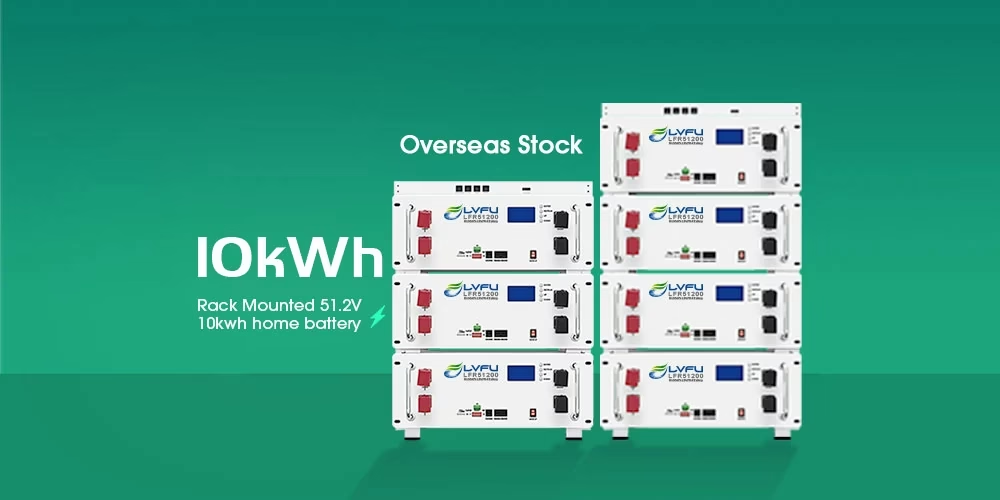
🔋 what does a “10kWh battery” really mean?
In simple terms, it means the battery can store 10 kilowatt-hours of energy—which is exactly the same as having 10,000 watt-hours of electricity ready to be used whenever you need it.
To put that in perspective, consider that one kilowatt-hour (kWh) represents the amount of energy a 1,000-watt device consumes over one full hour.
So, if you’re running something that draws around 1,000 watts—like a small space heater or a powerful microwave—the battery could theoretically keep it going for about 10 hours.
Now, in everyday life, what does that actually look like? Well, for an average home using energy-efficient appliances, a 10kWh battery is generally enough to get through a full night. It can comfortably power essentials such as lights, your Wi-Fi router, a fridge, and some fans—without skipping a beat.
All in all, it’s a solid amount of stored energy ready to support your home when you need it most.
☀️ How a 10kWh LiFePO₄ Battery Operates
These days, most home energy storage systems rely on LiFePO₄ (also called LFP) chemistry—and for good reason. Simply put, it delivers superior safety, excellent longevity, and remarkable thermal stability.
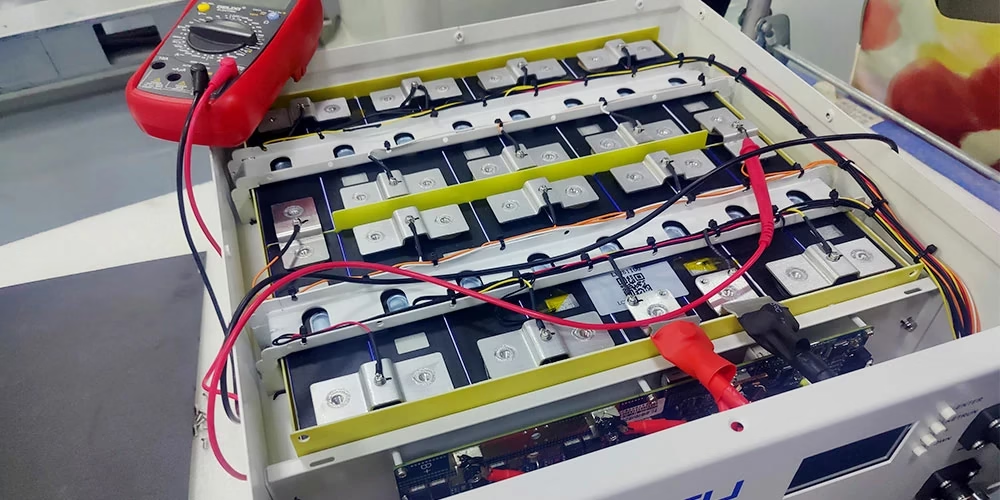
So, what exactly makes up a typical 10kWh battery? In most cases, you’ll generally find:
- Battery cells grouped together into modules
- A smart Battery Management System (BMS)
- Along with cooling and monitoring components
Here’s how they all work together: essentially, the BMS constantly watches over the battery—tracking key metrics like cell voltage, temperature, and current. By actively managing these factors, it not only keeps everything running safely but also helps prevent overcharging and avoid damaging deep discharges.
📊 Key Technical Parameters of LVFU LFR51200 10kWh Battery
Understanding battery specs can really help you decide if a particular model is right for your needs. Let’s break down the core specs of the LVFU LFR51200—a 51.2V 200Ah rack-mounted battery with 10.24 kWh of storage:
Below are the core parameters of the LFR51200 – 51.2V 200Ah rack mounted battery (10.24kWh):
✔ Battery Type: LFP (LiFePO₄)
✔ Nominal Voltage: 51.2V
✔ Rated Capacity: 200Ah
✔ Rated Energy: 10.24kWh
✔ When it comes to charging performance, here’s what you can expect:
- Charging voltage range: 43.2–57.6V
- Max charging current: 100A
- Float voltage: 54V
- Max charging current :100A
✔ As for discharge performance:
- Max discharge current: 100A
- Cut-off conditions:
- SOC ≤15%
- Total voltage ≤46.4V
- Cell voltage ≤2.9V
One more thing—this battery comes in a rack-mount design, which makes it super easy to stack multiple units together if you want to scale up your system later.
🏠 How Long Can a 10kWh Battery Power Your Home?
So how long will a 10kWh battery actually last in real life? The answer really depends on which appliances you’re running.
| Load Type | Approx. Power | Runtime with 10kWh Battery |
| Basic essentials only | 300–500W | 18–30 hours |
| Typical nighttime usage | 800–1200W | 7–12 hours |
| Full household with AC | 2–3kW | 3–5 hours |
| Emergency loads | 500–700W | 14–20 hours |
In most cases, households only connect essential devices to their backup power circuit. That means a 10kWh battery can typically carry a family comfortably through the night—keeping the lights, Wi-Fi, fridge, and other basics running smoothly until morning.
⚡ Best Use Cases for a 10kWh Battery
Wondering where a 10kWh battery really shines? Here are some of the most common and practical applications:
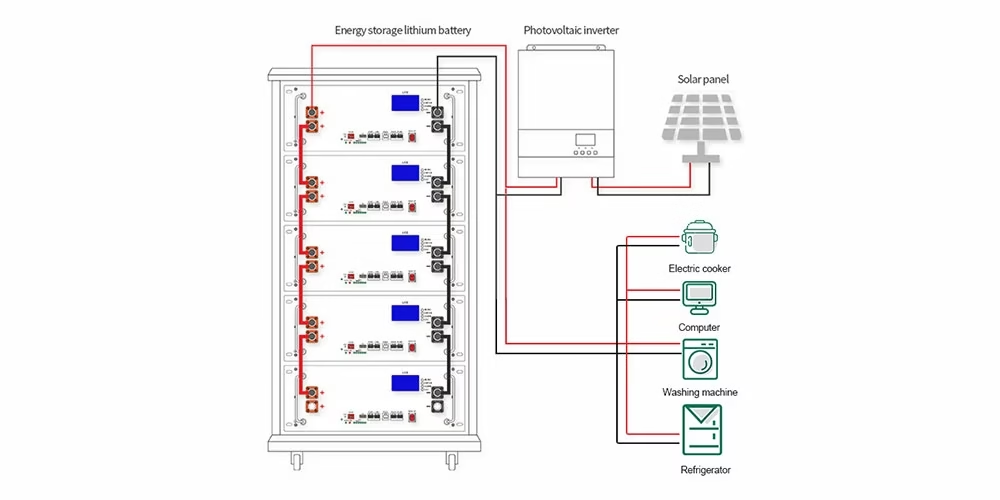
✔ Solar self-consumption
You can store extra solar power generated during the day and use it in the evening, reducing your reliance on the grid.
✔ Backup Power During Outages
When the power goes out, a 10kWh unit keeps essentials like your refrigerator, lights, and Wi-Fi running smoothly for hours.
✔ Time-of-Use Bill Savings
Charge your battery when electricity rates are low, then draw from it during expensive peak hours to cut your energy costs.
✔ Small Business or Workshop Use
If you run a shop, farm, or small workspace with moderate power needs, a single 10kWh module can provide reliable, stable electricity.
✅ Advantages of a 10kWh LiFePO₄ Battery
✔ Long Lifespan
LFP batteries can easily deliver 6,000+ cycles, which typically translates to over 10 years of daily use.
✔ High safety level
Thermal stability reduces the risk of overheating or combustion.
✔ High usable energy
Most LFP batteries allow 80–90% depth of discharge (DOD).
✔ Low maintenance
A built-in Battery Management System (BMS) automatically handles balancing, protection, and monitoring—so you don’t have to.
✔ Scalable design
If your needs grow, you can simply stack multiple 10kWh units to build a larger 20, 30, or even 150kWh system.
❓ Is a 10kWh Battery Enough for Your Home?
A 10kWh home battery can be a great fit, especially if your household:
- Use 8–15kWh electricity per day
- Want nighttime solar storage
- Need backup for essential loads
- Prefer compact and rack-mounted designs
- Have inverters compatible with 48V/51.2V battery systems
That said, if you regularly power heavy loads like central AC or large water pumps, you may want to consider linking multiple batteries for extra capacity.