

48V Lithium-Ion Battery vs Lead-Acid: Which Is Best for Your Solar Energy System?
Imagine this: Your solar panels are shining under the sun, but how does your home stay powered after sunset? This is where the energy storage battery becomes the “heart” of your solar power system. For off-grid or hybrid systems, especially those using a 48V DC bus, choosing the right battery technology is crucial. In the market, traditional lead-acid batteries and modern lithium-ion batteries (particularly Lithium Iron Phosphate) are the two main contenders. So, which one is truly the best choice for your solar energy system? This in-depth comparison will reveal the answer.
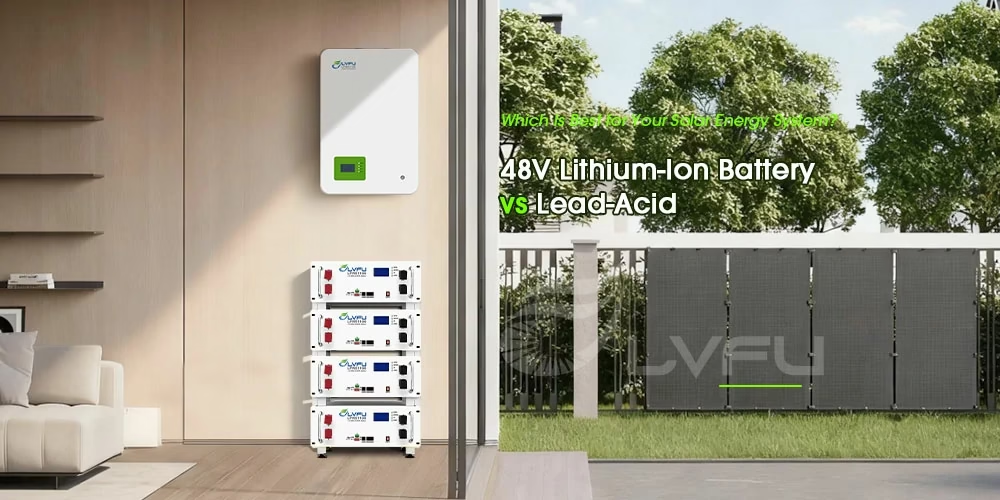
Head-to-Head: Key Performance Metrics
Lifespan & Cycle Life
Lead-Acid: Typically offers 300-500 deep cycles (to 50% depth of discharge). Frequent deep discharges significantly shorten its life, usually lasting 3-5 years.
48V Lithium-Ion: Especially LiFePO4 types, can provide 2000-6000 cycles, with a lifespan often exceeding 10 years. They can withstand daily deep cycling for many years.
Winner: Lithium-Ion Battery
Depth of Discharge & Usable Capacity
Lead-Acid: To ensure longevity, a maximum Depth of Discharge of 50% is recommended. This means from a 10kWh battery, you can only safely use about 5kWh.
48V Lithium-Ion: Can safely utilize over 90% of their rated capacity. A 10kWh lithium battery delivers nearly all 10kWh of usable energy.
Winner: Lithium-Ion Battery
Energy Density & Space
Lead-Acid: Bulky and heavy. Storing the same energy requires 2-3 times more space and structural support compared to lithium.
48V Lithium-Ion: High energy density, compact, lightweight, and allows for flexible installation.
Winner: Lithium-Ion Battery
Efficiency & Charging Speed
Lead-Acid: Charging efficiency is around 70-85%. Charging is slower and requires a full, absorbent charge to maintain health.
48V Lithium-Ion: Charging efficiency reaches 95-98%. They absorb solar power faster, minimizing waste, and support rapid recharging.
Winner: Lithium-Ion Battery
Upfront Cost vs. Total Cost of Ownership
Lead-Acid: The initial purchase cost is significantly lower, which is its main appeal.
48V Lithium-Ion: Higher initial investment. However, considering their long life, higher usable capacity, and near-zero maintenance, their Total Cost of Ownership over the system’s life is often lower.
Verdict: Tie/Depends on Perspective (Lead-acid wins on upfront cost, Lithium wins on long-term value).
Maintenance & Safety
Lead-Acid (especially flooded): Require regular checking of electrolyte levels and topping up with distilled water. They vent gases and need a well-ventilated installation space.
48V Lithium-Ion: Virtually maintenance-free. Quality battery packs include a Battery Management System for protection against overcharge, over-discharge, and temperature extremes. LiFePO4 chemistry is inherently stable and safe.
Winner: Lithium-Ion Battery
Which Battery Should You Choose for Your Solar System?
Choose Lead-Acid Batteries if:
Your budget is extremely tight, and minimizing initial investment is the top priority.
Your solar system is for occasional backup power (e.g., a cabin) with very low usage frequency.
You can perform regular maintenance and have a well-ventilated, sturdy space for installation.
Choose 48V Lithium-Ion Batteries if:
You prioritize long-term reliability and the lowest Total Cost of Ownership.
You need to maximize the use of your daily solar generation for higher energy self-sufficiency.
Installation space is limited or weight is a concern.
You want a maintenance-free, smart system that can be easily monitored.
Conclusion and Final Recommendation
For the vast majority of modern residential and commercial solar energy systems, 48V lithium-ion batteries (specifically LiFePO4) are the technically superior and more cost-effective long-term choice. Their overwhelming advantages in lifespan, efficiency, depth of discharge, and space utilization justify the higher initial price.
While lead-acid batteries still have a niche market due to their low entry cost, if you view your solar system as a long-term investment to save on electricity bills and increase energy independence for a decade or more, investing in a 48V lithium-ion battery system is undoubtedly the wiser, future-proof decision.
